If you own or operate a diesel truck, maintenance isn’t a line item you can ignore — it’s one of the biggest ongoing costs of keeping your vehicle on the road. Whether you’re an owner-operator running a single rig or a fleet manager overseeing dozens of trucks, understanding diesel truck maintenance costs helps you plan ahead, avoid unpleasant surprises, and keep your trucks running reliably for the long haul.
This guide breaks down what diesel truck maintenance costs typically include, what drives those costs up or down, and how a proactive maintenance approach can help you avoid the kind of expensive breakdowns that hurt both your budget and your schedule. We’ll also cover a practical maintenance checklist, warning signs to watch for, and tips for budgeting effectively — with guidance from the team at Diesel Works Truck & Trailer Repair.
What Are Diesel Truck Maintenance Costs?
Diesel truck maintenance costs generally fall into two categories: routine, scheduled maintenance and unplanned repairs.
Routine maintenance covers the predictable, recurring services that keep a truck running the way it’s supposed to — things like oil changes, filter replacements, and inspections. These costs are relatively easy to plan for because they happen on a known schedule, whether that’s based on mileage, time, or engine hours.
Unplanned repairs, on the other hand, are the expenses that show up when something breaks or wears out unexpectedly — a failed turbocharger, a cracked exhaust manifold, or a transmission issue, for example. These costs are harder to predict and tend to be more expensive, especially if the underlying problem wasn’t caught early.
Understanding this distinction matters because the goal of good maintenance isn’t just to spend money on upkeep — it’s to shift as much of your spending as possible toward the predictable, lower-cost side of the ledger and away from expensive surprises.
How Much Does Diesel Truck Maintenance Cost?
There’s no single number that accurately describes diesel truck maintenance costs, because so much depends on the specific truck, how it’s used, and where it’s serviced. What we can say with confidence is that costs generally scale with a few key variables: the type of service being performed, the truck’s mileage and age, how the truck is used day to day, and the severity of any repair involved.
A basic oil change and filter service will cost far less than replacing a fuel injector or rebuilding a transmission. Similarly, a truck with 400,000 miles on it is statistically more likely to need repairs than one with 40,000 miles, simply because more components have had time to wear down.
It’s also worth noting that any cost figures you see online — including general ranges — are estimates, not fixed prices. Actual costs vary by region, by shop, by whether you’re using OEM (original equipment manufacturer) or aftermarket parts, and by local labor rates. The most reliable way to understand what maintenance will cost for your specific truck is to get quotes from a trusted diesel repair shop familiar with your make and model.
Routine Maintenance vs. Unexpected Repairs
The cost gap between routine maintenance and unexpected repairs is usually significant. Routine services are priced around parts and standard labor time. Unexpected repairs often involve diagnostic time, more complex labor, and sometimes cascading damage — for example, a neglected coolant leak that eventually leads to engine overheating and more extensive damage.
Why Diesel Truck Maintenance Can Cost More Than Gasoline Truck Maintenance
Diesel trucks include systems that gasoline vehicles typically don’t have to the same degree — high-pressure fuel injection systems, turbochargers, diesel particulate filters (DPF), and diesel exhaust fluid (DEF) systems designed to meet emissions standards. These components often require specialized diagnostic tools and trained technicians, which can factor into labor costs. That said, diesel engines are also generally built for durability and higher mileage, which can offset some of these costs over the life of the truck.
What Factors Affect Diesel Truck Maintenance Costs?
Several variables influence how much you’ll spend on maintenance over time:
- Truck age and mileage — Older trucks and higher-mileage trucks generally require more frequent repairs as components wear.
- Engine size and configuration — Larger, more powerful engines can involve higher part and labor costs when service is needed.
- Truck make and model — Parts availability and pricing vary by manufacturer; some brands have more affordable aftermarket parts than others.
- Driving conditions — Trucks driven in extreme heat, cold, mountainous terrain, or heavy stop-and-go traffic tend to experience more wear than those running steady highway miles.
- Load weight — Regularly hauling near maximum capacity puts additional strain on brakes, tires, suspension, and drivetrain components.
- Annual mileage — More miles driven generally means more frequent service intervals and faster component wear.
- Maintenance history — A truck with a consistent maintenance history typically costs less to maintain going forward than one with deferred or skipped services.
- Parts and labor costs — Dealer service tends to cost more than independent shops, and OEM parts typically cost more than aftermarket alternatives, though quality can vary.
- Frequency of preventative maintenance — Trucks serviced on schedule tend to avoid the compounding costs that come from small issues turning into bigger ones.
Common Diesel Truck Maintenance Expenses
While the exact cost of each service will vary, most diesel truck maintenance budgets need to account for the following recurring categories:
- Oil and filter changes — One of the most frequent and foundational maintenance items; clean oil protects the engine from premature wear.
- Fuel filter replacement — Diesel fuel systems are sensitive to contamination, making clean fuel filters essential for engine performance.
- Air filter replacement — A clogged air filter can reduce fuel efficiency and engine performance over time.
- Brake maintenance — Includes pad and drum wear, air brake system checks, and adjustments — critical for both safety and compliance.
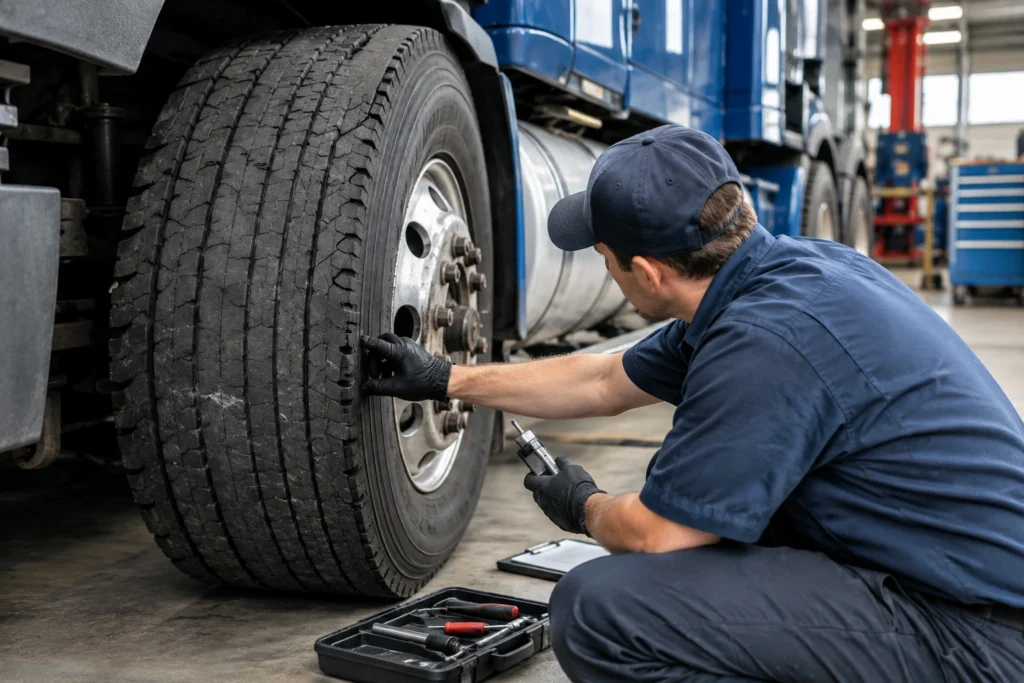
- Tire maintenance — Rotation, alignment, and timely replacement affect fuel economy, handling, and overall safety.
- Coolant system maintenance — Prevents overheating, which can lead to serious and expensive engine damage if ignored.
- Battery and electrical system checks — Diesel engines rely on strong electrical systems for starting and running auxiliary components.
- Transmission service — Fluid changes and inspections help extend the life of a costly component to repair or replace.
- DPF and emissions system maintenance — Diesel particulate filters require periodic cleaning or replacement to maintain performance and stay compliant with emissions regulations.
- DEF system maintenance — Diesel exhaust fluid systems need monitoring to avoid performance restrictions or fault codes.
- Belts, hoses, and other wear components — Smaller items that are inexpensive to replace proactively but can cause bigger problems if they fail unexpectedly.
Diesel Truck Maintenance Checklist
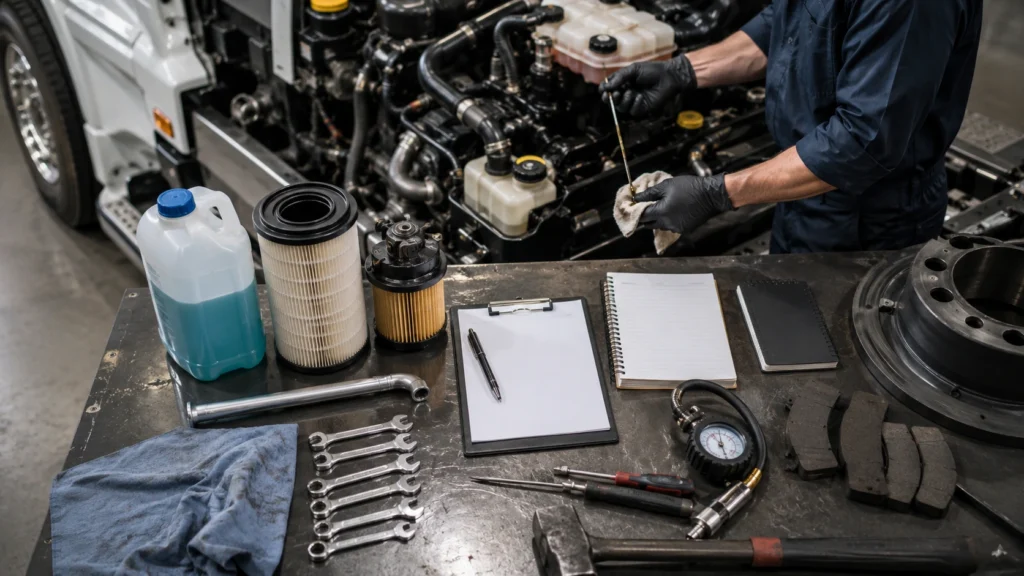
A consistent maintenance routine is one of the most effective ways to manage costs over time. Here’s a practical diesel truck maintenance checklist you can adapt for your truck or fleet:
Daily Checks
- Fluid levels (oil, coolant, DEF)
- Tire pressure and visible condition
- Lights and signals
- Visual inspection for leaks
Weekly Checks
- Belt and hose condition
- Battery terminals and connections
- Brake system inspection
Monthly Checks
- Air filter condition
- DEF fluid levels and system function
- Undercarriage inspection for damage or leaks
Mileage-Based Maintenance
- Oil and filter changes
- Fuel filter replacement
- Transmission service (based on manufacturer-recommended intervals)
Annual Inspections
- DOT inspection
- Emissions system check
- Comprehensive multi-point inspection
Keeping a written or digital log of these checks — even simple ones — makes it easier to catch small issues before they become expensive repairs, and provides useful documentation for warranty claims or resale.
Diesel Truck Repair and Maintenance: Routine vs. Major Repairs
It’s worth returning to the distinction between routine maintenance and major repairs, because it directly affects your budget. Diesel truck repair and maintenance are related but not the same thing — one is planned and predictable, the other often is not.
Some of the more costly repairs diesel truck owners may eventually face include turbocharger failure, fuel injector replacement, DPF regeneration failures, transmission rebuilds, and major engine work. Costs for these repairs can vary substantially depending on the truck and the extent of the damage.
The good news is that many major repairs don’t come out of nowhere. Warning signs — unusual noises, performance changes, warning lights — often appear well before a full failure occurs. Catching these signs early, through the kind of routine inspections outlined above, gives you the chance to address a smaller problem before it turns into a much larger and more expensive one.
How Preventative Maintenance Can Reduce Diesel Truck Maintenance Costs
Preventative maintenance works by catching wear and minor issues before they cause bigger problems. Regular inspections, timely fluid changes, filter replacements, and periodic diagnostics all play a role in identifying issues while they’re still inexpensive to fix.
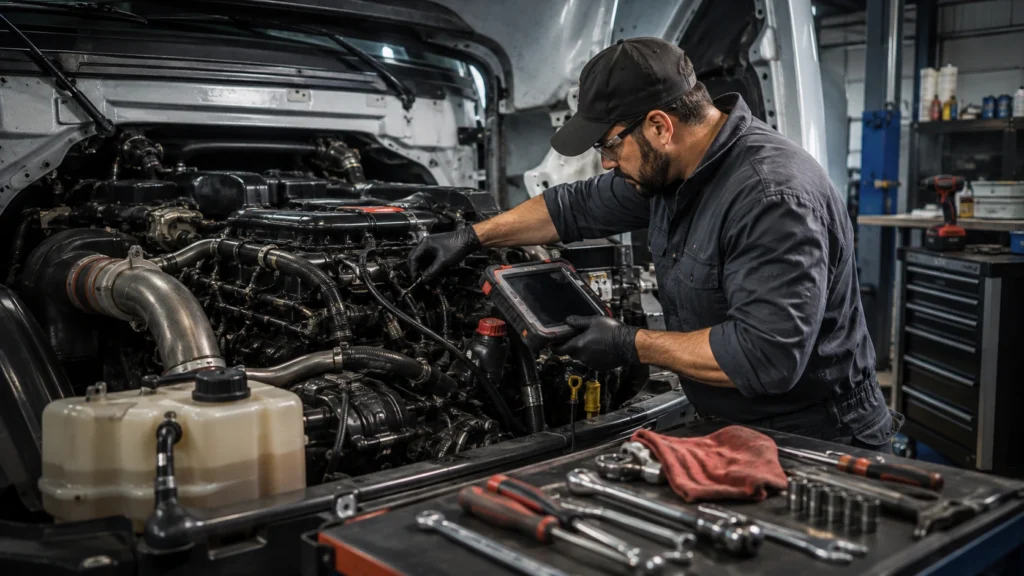
Neglected maintenance tends to compound. A clogged fuel filter, left unaddressed, can put extra strain on the fuel pump. A worn belt that snaps can damage other components it was driving. In many cases, the cost of preventative maintenance is far lower than the cost of the repair it could have prevented — though the exact savings will depend on the specific issue and how early it’s caught.
How Often Should Diesel Trucks Be Serviced?
There’s no single service interval that applies to every diesel truck. How often your truck should be serviced depends on:
- Manufacturer recommendations for your specific make and model
- Current mileage
- Operating conditions (climate, terrain, load)
- How the truck is used (long-haul vs. local delivery, for example)
- Engine type and configuration
- Fleet-specific requirements or duty cycles
The best starting point is always your owner’s manual or manufacturer service schedule, adjusted based on how your truck is actually driven. A truck used for frequent short trips in stop-and-go traffic may need more frequent servicing than one primarily driven on the highway, even if both have similar mileage.
Signs Your Diesel Truck May Need Maintenance or Repairs
Paying attention to how your truck runs can help you catch problems before they become serious, and can tell you when it’s time to schedule maintenance for diesel trucks. Common warning signs include:
- Unusual engine noise — Knocking, ticking, or grinding sounds can indicate a range of issues from minor to serious.
- Reduced fuel economy — A sudden drop in mileage can point to fuel system, filter, or engine problems.
- Excessive smoke — Black, blue, or white smoke from the exhaust can each indicate different underlying issues.
- Loss of power — Reduced acceleration or difficulty maintaining speed under load.
- Warning lights — Check engine, DPF, or DEF warning lights should never be ignored.
- Difficult starting — Can point to battery, glow plug, or fuel system issues.
- Fluid leaks — Oil, coolant, or transmission fluid under the truck is a clear signal something needs attention.
- Brake problems — Grinding, pulling, or reduced stopping power are safety-critical issues.
- Transmission issues — Slipping, delayed engagement, or rough shifting.
- DPF or emissions warnings — Often indicate the filter needs cleaning, regeneration, or replacement.
If you notice any of these signs, having the truck inspected promptly can help prevent a smaller issue from turning into a major repair.
How to Budget for Diesel Truck Maintenance
A practical budget for diesel truck maintenance costs doesn’t just account for scheduled services — it also plans for the unexpected. Consider building your budget around these elements:
- Routine maintenance budget — A predictable line item based on your truck’s mileage and service schedule.
- Emergency repair reserve — Setting aside funds specifically for unplanned repairs helps avoid cash flow strain when something breaks.
- Maintenance tracking — Using a logbook, spreadsheet, or maintenance software to track services performed and upcoming needs.
- Service scheduling — Booking routine maintenance proactively, rather than reactively, to minimize downtime.
- Cost-per-mile considerations — Tracking maintenance spend relative to miles driven can help you compare trucks and plan for replacement timing.
- Record keeping — Detailed maintenance records support warranty claims, help identify recurring issues, and can improve resale value.
Cost-Per-Mile as a Budgeting Tool
For fleet managers especially, tracking maintenance cost-per-mile across trucks can reveal which vehicles are becoming more expensive to maintain relative to their value — useful information when deciding whether to keep repairing an older truck or plan for its replacement. Many shops, including Diesel Works, offer custom fleet maintenance plans built around a fleet’s specific mileage, usage, and duty cycle.
Tips for Keeping Diesel Truck Maintenance Costs Under Control
- Follow the manufacturer’s maintenance schedule rather than guessing at intervals.
- Perform regular inspections, using the checklist above as a starting point.
- Address minor problems early, before they develop into larger repairs.
- Use quality replacement parts, weighing the tradeoffs between OEM and aftermarket options.
- Keep accurate maintenance records for every service performed.
- Monitor vehicle performance and take warning signs seriously.
- Work with a qualified diesel truck repair provider who has experience with your specific make and model.
Conclusion
Diesel truck maintenance costs are shaped by a wide range of factors — truck age, mileage, driving conditions, and maintenance history among them — which is why there’s no one-size-fits-all number to plan around. What owners and fleet managers can control is how proactively they approach maintenance. Regular inspections, timely repairs, and accurate record keeping all help catch small issues before they become expensive problems.
Building a maintenance routine around the checklist and budgeting strategies outlined here is a practical starting point for keeping your diesel truck reliable — and your diesel truck maintenance costs as predictable as possible. If you’re due for service or want a professional opinion on a developing issue, you can request a free estimate from the Diesel Works team.
Frequently Asked Questions About Diesel Truck Maintenance Costs
How much does it cost to maintain a diesel truck? Diesel truck maintenance cost
varies widely depending on the truck’s age, mileage, usage, and the specific services needed. Routine maintenance is generally more affordable and predictable than major repairs, which can vary significantly in cost.
Are diesel trucks expensive to maintain?
Diesel trucks can involve higher costs for certain systems, like emissions and fuel components, compared to gasoline vehicles. However, diesel engines are also built for durability, which can offset some of these costs over a longer service life.
What is the most expensive diesel truck repair?
Major engine work, transmission rebuilds, and turbocharger replacement tend to be among the more costly repairs, though actual costs depend on the truck, the extent of damage, and local labor rates.
How often should a diesel truck be serviced?
This depends on the manufacturer’s recommendations, mileage, driving conditions, and how the truck is used. There isn’t a single interval that applies to every truck.
What maintenance does a diesel truck need?
Common maintenance includes oil and filter changes, brake service, tire maintenance, coolant system checks, and attention to diesel-specific systems like the DPF and DEF.
How can I reduce diesel truck maintenance costs?
Following a consistent preventative maintenance schedule, addressing issues early, and keeping detailed maintenance records are among the most effective ways to help manage diesel truck maintenance costs over time.
Is preventative maintenance worth the cost?
For most owners, yes — preventative maintenance is generally far less costly than the major repairs that can result from neglected upkeep, though actual savings depend on the specific issue and how early it’s identified.