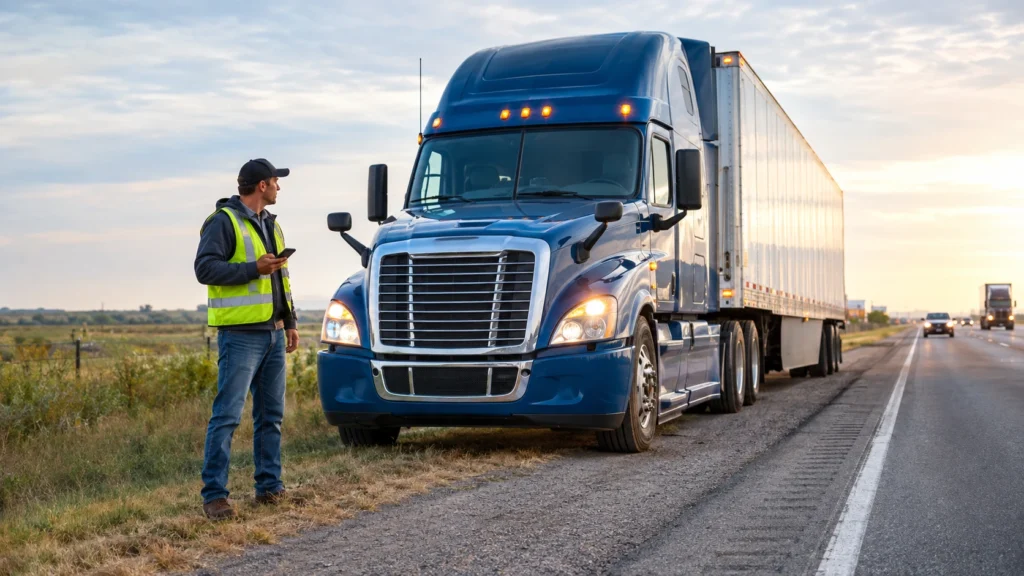
It’s 2 a.m. on I-69E outside Brownsville, and a driver hauling a full trailer just felt the unmistakable shudder of a blown steer tire. There’s no shoulder to speak of, traffic is thin but fast, and the nearest truck stop is 40 minutes out. This is the moment semi truck roadside assistance exists for — and it’s a moment every driver and fleet manager should be prepared for long before it happens.
This guide covers what semi truck roadside assistance actually is, the emergencies it handles, how the process works from the first call to getting back on the road, and what to look for when choosing a provider — including a dedicated section on finding reliable coverage in and around Brownsville, Texas.
What Is Semi Truck Roadside Assistance?
Semi truck roadside assistance is on-site emergency support built specifically for commercial trucks — not the car-focused programs most people are familiar with from AAA or a dealership warranty plan. It covers issues like tire blowouts, engine trouble, battery failure, and breakdowns that leave a truck stranded on a highway shoulder, at a weigh station, or in a parking lot.
The service is typically offered by dedicated commercial roadside providers, some trucking insurance policies as an add-on, and industry associations that bundle it into membership plans. What separates it from passenger-vehicle roadside assistance isn’t just the size of the truck — it’s the equipment, training, and logistics required to safely handle an 80,000-pound vehicle on an active highway.
Why Semi Trucks Need Specialized Roadside Assistance
A standard tow truck simply isn’t built for a loaded semi. Commercial trucks require heavy-duty towing equipment, technicians who understand air brake systems, and providers who can work around DOT regulations and cargo considerations that don’t apply to a stranded sedan.
A few factors make semi truck breakdowns fundamentally different:
- Weight and axle configuration — GVWR on a loaded semi can exceed 80,000 lbs, requiring heavy-duty wreckers and recovery equipment far beyond what passenger-vehicle tow trucks carry.
- Air brake systems — diagnosing and safely repairing air brakes requires specific technician training that general auto mechanics don’t have.
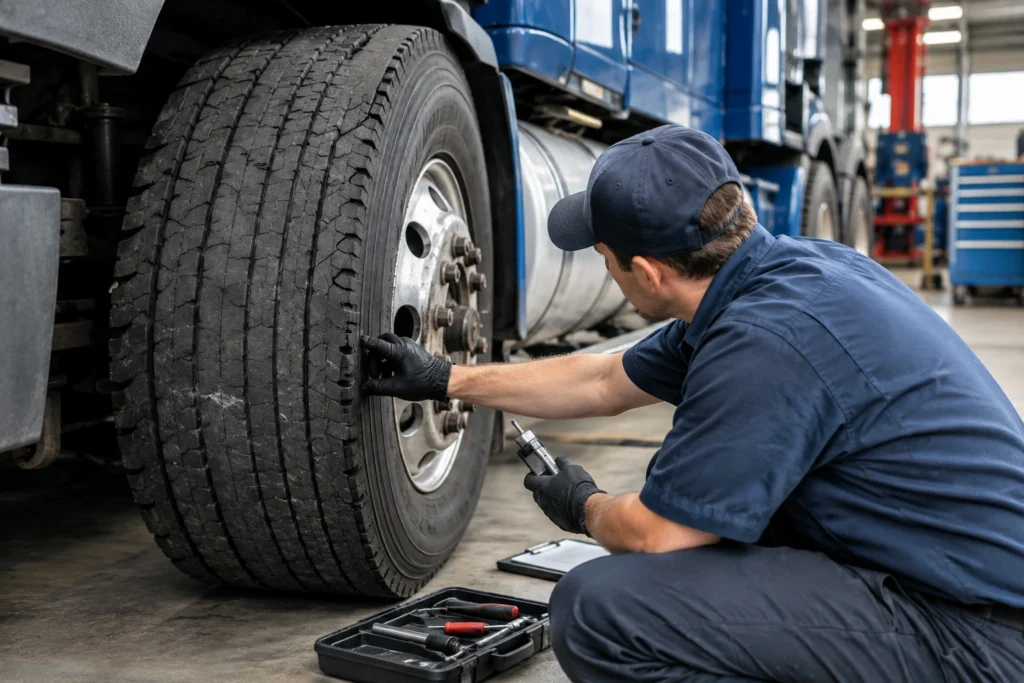
- Tire size and mounting — semi tires are larger, heavier, and require specialized tools to mount and balance roadside.
- Hours-of-service pressure — a breakdown eats into a driver’s available driving hours, so speed and communication matter more than they would for a personal road trip.
- Cargo sensitivity — refrigerated freight, hazmat loads, or time-sensitive deliveries add urgency and complexity that a passenger vehicle breakdown never has.
How It Differs from Passenger Vehicle Roadside Assistance
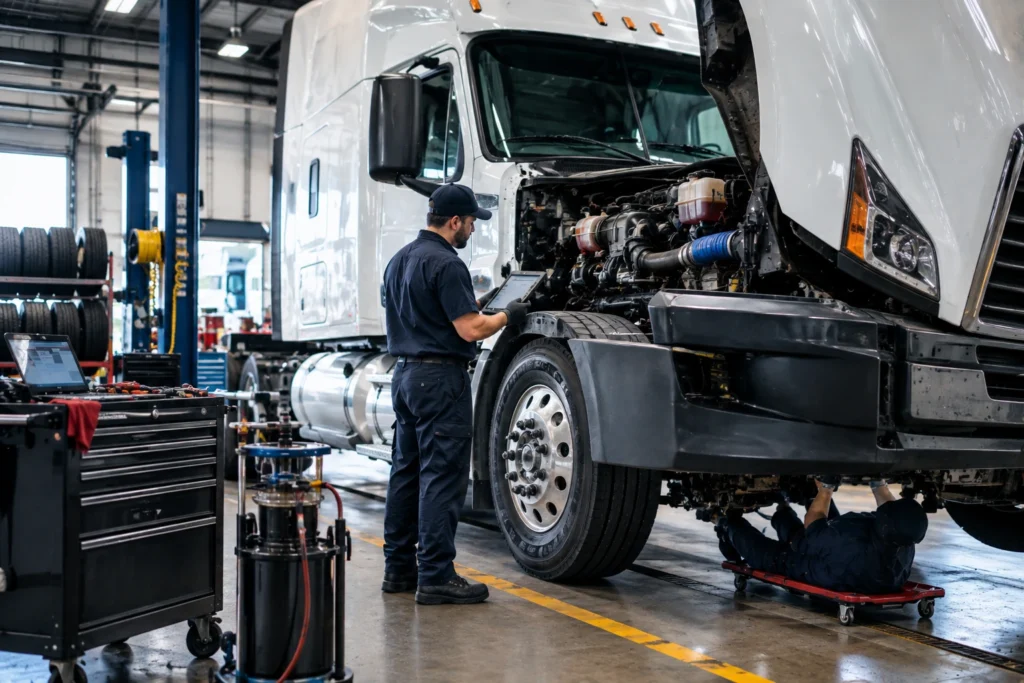
Beyond equipment, the entire response process is different. Commercial roadside providers dispatch heavy-duty tow trucks (not flatbeds meant for cars), send technicians certified to work on air brake and diesel systems, and often need to coordinate directly with a driver’s dispatcher or fleet office — not just the driver.
Common Semi Truck Roadside Emergencies
Most roadside assistance for semi trucks calls fall into a handful of recurring categories. Knowing what’s common helps drivers recognize a problem early and helps fleets budget for the realities of over-the-road operations.
Tire blowouts and flats are the single most common roadside call. Heat buildup, worn retreads, and road debris all contribute, and a blowout at highway speed is also one of the more dangerous events a driver can experience.
Battery and electrical failures show up most often in extreme cold, when battery output drops and diesel engines are harder to turn over. Alternator failure is a close second cause.
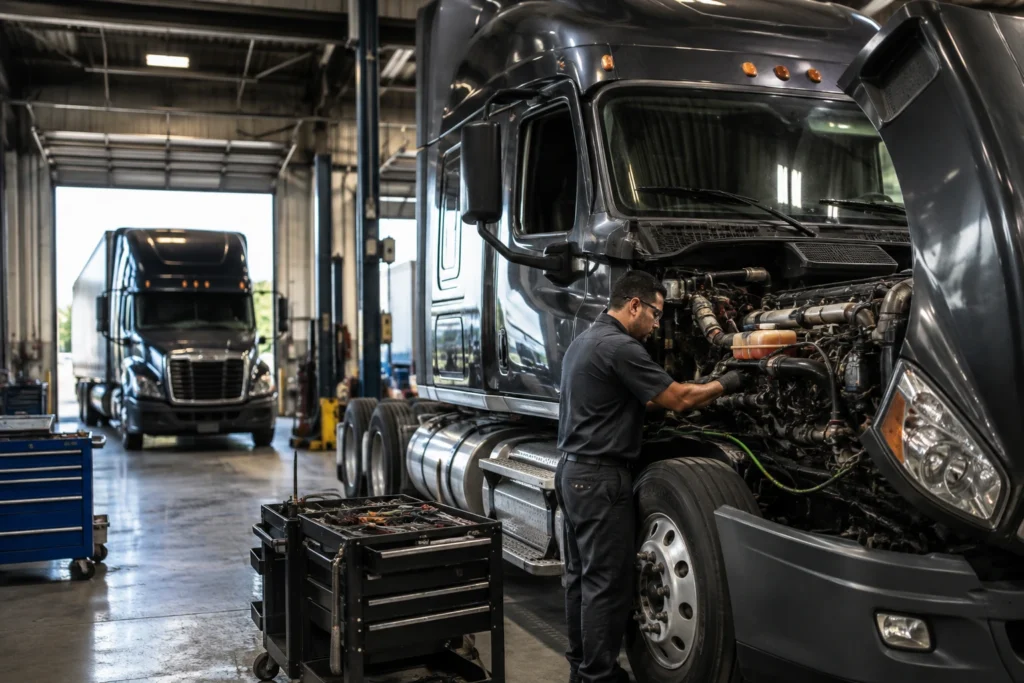
Engine trouble and overheating can stem from coolant loss, a failed sensor, or a DEF (diesel exhaust fluid) system fault that trips the engine into limp mode or shuts it down entirely.
Brake system problems, particularly air brake issues, are treated as safety-critical and typically require an immediate response rather than a scheduled repair.
Fuel issues range from simply running out of fuel to fuel gelling in cold weather or contaminated fuel causing engine trouble.
Lockouts happen more than most drivers expect — keys locked inside a running or parked truck, especially during quick stops.
Jackknifing and accident-related breakdowns require a different kind of response, often involving recovery and winching in addition to standard repair services.
Services Typically Included in Semi Truck Roadside Assistance
When evaluating roadside assistance semi truck providers, look for coverage across this core set of services:
- Heavy-duty towing for fully loaded trailers
- Mobile tire repair and replacement
- Jump starts and battery replacement
- Fuel delivery
- Lockout service
- Minor on-site mechanical repairs
- Winching and recovery for off-road or ditch situations
- Dispatch coordination with the driver’s fleet or broker
Not every provider offers every service, so it’s worth confirming this list directly rather than assuming “roadside assistance” means the same thing across companies.
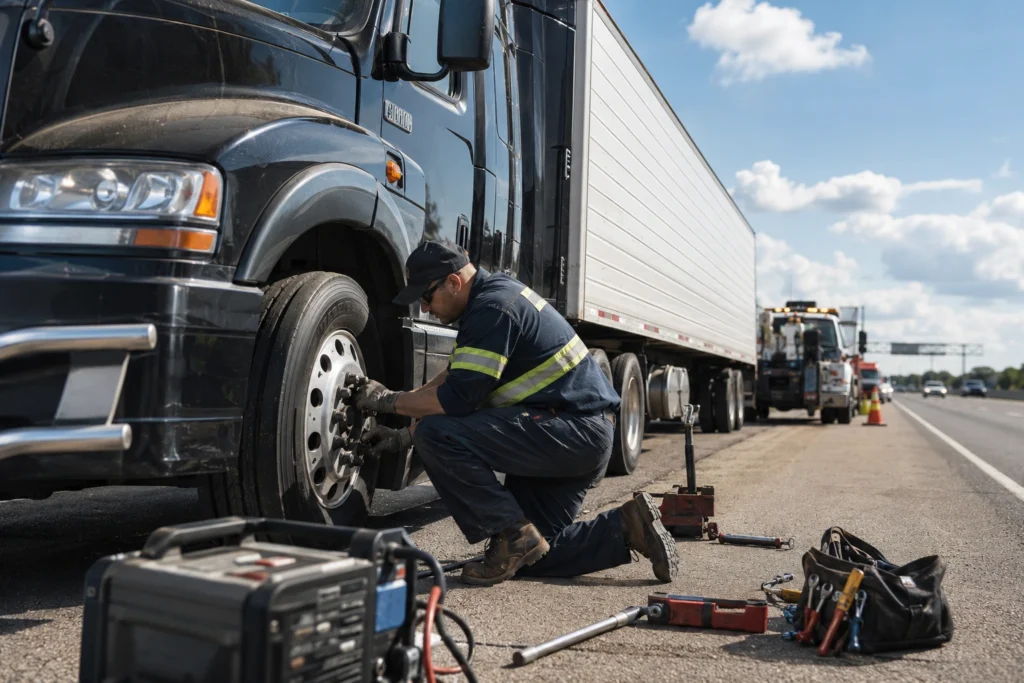
How the Roadside Assistance Process Works
Step 1 — Get to a safe location. Pull as far off the road as possible. Turn on hazard lights and set out reflective triangles at the spacing required by FMCSA regulations (roughly 10, 100, and 200 feet from the vehicle).
Step 2 — Call and provide key details. Have your location or nearest mile marker ready, along with truck type, cargo details, and a description of the problem. The more specific the information, the faster dispatch can send the right equipment.
Step 3 — Dispatch and ETA. Providers estimate arrival based on technician location, traffic, and the complexity of the issue. A good provider will give a realistic window rather than a vague “soon.”
Step 4 — On-site diagnosis and repair or tow decision. The technician assesses whether the truck can be repaired roadside or needs to be towed to a shop.
Step 5 — Getting back on the road. Once repaired, the driver resumes the route. If towed, the provider should coordinate with the driver or fleet on next steps for the load and the truck.
When to Call Roadside Assistance
Not every issue requires an emergency call, but some absolutely do. Anything involving brakes, steering, or fire risk should trigger an immediate call — these aren’t situations to wait out or attempt to diagnose alone. Minor issues, like a dashboard warning light with no performance change, may be worth monitoring until the next scheduled stop. When in doubt, the safer move is to call; a breakdown that worsens on the road costs far more time than a precautionary stop.
Emergency Breakdown? What Truck Drivers Should Do Right Now
If you’re reading this because you’re stopped on the shoulder right now, here’s the short version:
- Turn on hazard lights immediately.
- Pull as far off the roadway as safely possible.
- Set out reflective triangles at proper spacing if you can do so safely.
- Stay visible — a high-vis vest helps if you need to exit the cab.
- Call for semi truck roadside assistance near me and provide your exact location, truck type, and the problem.
Need help now? Call [phone number] for immediate dispatch — available 24/7.
Semi Truck Roadside Assistance in Brownsville, TX
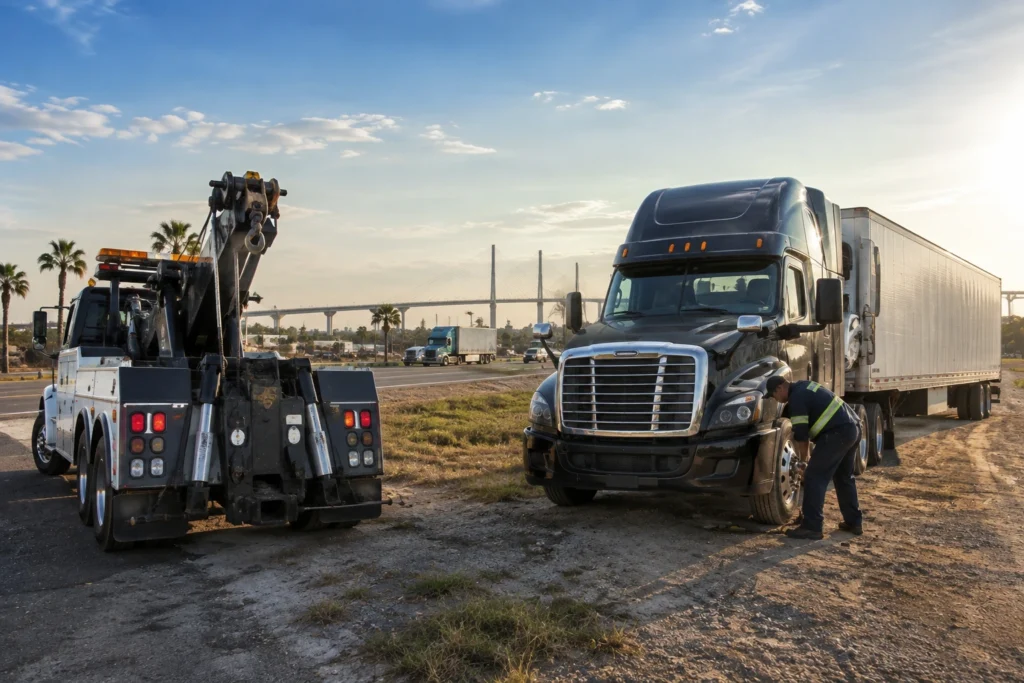
Finding reliable semi truck roadside assistance in Brownsville means understanding a few local realities. The city sits at a unique intersection of heavy commercial traffic, cross-border freight, and South Texas heat — all of which shape what “reliable roadside assistance” actually looks like locally.
Why Local Response Time Matters on Brownsville-Area Highways
Corridors like I-69E and Highway 77/83 carry a steady stream of commercial trucks, much of it tied to freight moving through the Los Indios and Gateway/Veterans international bridges. A provider based outside the immediate area may quote a fast ETA that doesn’t hold up once actual highway traffic and bridge-area congestion are factored in. Local familiarity with these routes makes a measurable difference in real response time.
Highway and Border-Corridor Coverage
Cross-border freight traffic means Brownsville sees a higher concentration of commercial trucks than the region’s population alone would suggest. A roadside provider that regularly works this corridor understands both the traffic patterns and the paperwork realities that come with international carriers, which can speed up an already stressful situation.
24/7 Availability in South Texas
Rio Grande Valley heat is a major contributor to summer breakdown risk — tire blowouts and overheating spike during peak temperatures. A provider that operates true 24/7 coverage, not just extended daytime hours, matters more here than in milder climates.
Heavy-Duty Towing Capability in Brownsville
Before relying on any provider, confirm they can tow a fully loaded trailer, not just a light-duty truck. This sounds obvious, but not every listed “roadside assistance” company in a given area actually carries heavy-duty wreckers.
Mobile Repair vs. Tow-In Options Locally
Ask whether a provider offers on-site diagnostics and repair for common issues (tires, batteries, minor mechanical problems) or whether every call defaults to a tow. Mobile repair capability can save hours compared to towing to a shop and waiting for service there.
Experience with Commercial and Cross-Border Freight Trucks
Familiarity with international carriers, ELD requirements, and the general rhythm of border-area freight operations is a meaningful differentiator among local providers — it’s not just about having a truck that can tow, but understanding the operational context around the breakdown.
How to Choose the Best Roadside Assistance for Semi Trucks
Rather than chasing a single “best” brand, here’s how to evaluate the best roadside assistance for semi trucks in practice:
Response time guarantees. Look for providers willing to commit to a realistic window, not just “we’ll get there when we can.”
24/7/365 availability. Breakdowns don’t follow business hours, and neither should your provider.
Heavy-duty equipment and towing capacity. Confirm they can handle a fully loaded semi, not just light trucks.
Technician certification and experience with commercial trucks. Air brakes, diesel engines, and DEF systems require specific expertise.
Coverage area and highway familiarity. A provider that regularly works your routes will have faster, more reliable response times.
Transparent pricing and billing. Ask about direct billing and fleet account options up front, before you need them in an emergency.
Track record with fleets and owner-operators. Reviews and references from other commercial drivers are more telling than generic star ratings.
What Affects Semi Truck Roadside Assistance Costs
Costs vary based on several factors: the type of service needed (a tire repair costs far less than a heavy-duty tow), distance traveled to reach the truck, time of day or holiday surcharges, and whether the driver or fleet has a membership plan versus paying per call. Fleet accounts often negotiate better rates than individual pay-per-call pricing, which is worth exploring for companies operating multiple trucks. As a general guide, simple services like jump starts or tire repairs tend to run in the low hundreds of dollars, while heavy-duty towing can run significantly higher depending on distance and equipment needed.
How Truck Drivers Can Reduce the Risk of a Roadside Breakdown
While not every breakdown is preventable, several habits meaningfully reduce the odds:
- Perform thorough pre-trip inspections, especially tire pressure and tread depth
- Monitor battery health, particularly before extreme heat or cold seasons
- Keep fuel and DEF levels well above empty rather than running close to reserve
- Stay current on preventive maintenance schedules rather than deferring service
- Keep a basic emergency kit in the cab — reflective triangles, flashlight, basic hand tools, and a charged phone
Frequently Asked Questions
What does semi truck roadside assistance include? Most providers cover heavy-duty towing, tire repair or replacement, jump starts, fuel delivery, lockout service, and minor on-site mechanical repairs.
How much does semi truck roadside assistance cost? Costs depend on the service needed, distance, and time of day. Simple services often run in the low hundreds of dollars, while towing can cost significantly more. Membership plans can reduce per-incident costs for frequent needs.
Can roadside assistance tow a fully loaded semi truck? Only if the provider has heavy-duty towing equipment. Always confirm this capability before you need it — not every company advertising “roadside assistance” carries the right equipment for a loaded trailer.
What should I do if my semi truck breaks down on the highway? Pull as far off the road as safely possible, turn on hazard lights, set out reflective triangles at proper spacing, and call for roadside assistance with your exact location and a description of the problem.
How quickly can semi truck roadside assistance arrive? It depends on location, traffic, and technician proximity. In areas with dedicated local coverage — like Brownsville’s highway corridors — response times tend to be more reliable than with providers dispatching from farther away.
How do I find semi truck roadside assistance near me? Save a provider’s number before you’re on the road, and confirm they cover your regular routes, operate 24/7, and handle commercial trucks specifically, not just passenger vehicles.
Final Thoughts
Every driver eventually faces some version of a roadside emergency — the question is whether they’re prepared for it. The difference between a manageable delay and a genuinely bad night comes down to preparation: knowing when to call, keeping safety gear within reach, and already having a trusted provider’s number saved. This matters even more in Brownsville, where border-corridor traffic, highway conditions, and South Texas heat push breakdown risk higher than average. The best time to think about roadside assistance is before you need it — a fast, properly equipped provider turns an inevitable part of trucking into something you can handle with confidence.
Need reliable semi truck roadside assistance in Brownsville or along the surrounding highway corridors? Contact us today at [+1(956)633-3235] for 24/7 dispatch and heavy-duty towing you can count on.