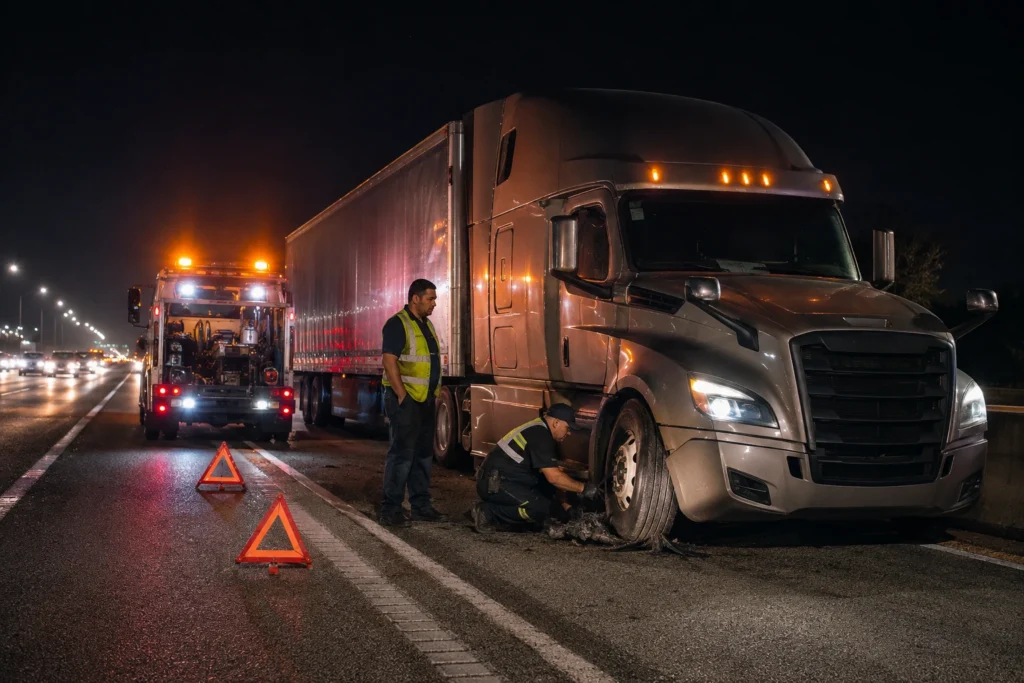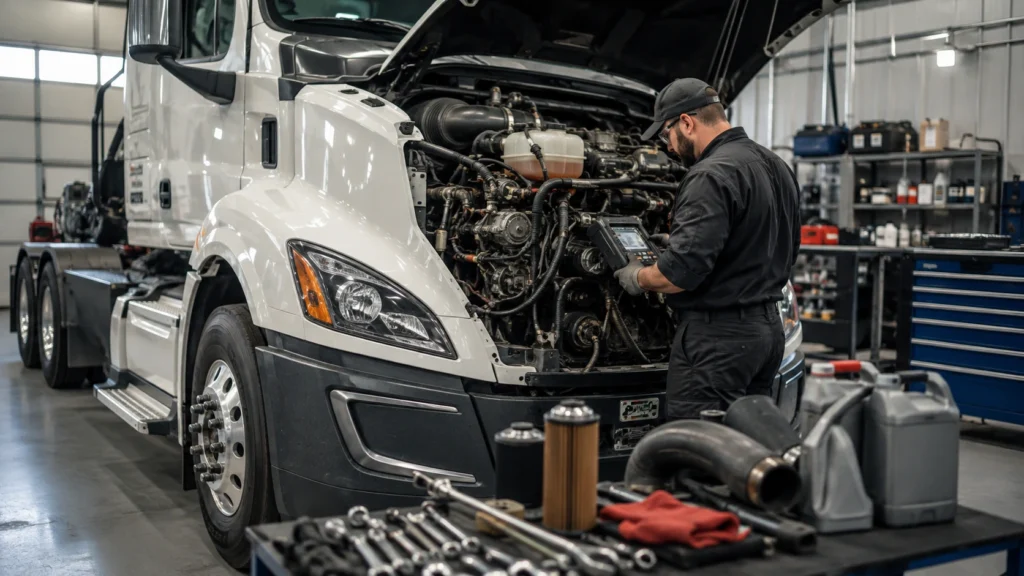
A diesel breakdown rarely happens at a convenient time. It’s usually a warning light at 60 mph, a no-start on a cold morning before a delivery window, or a piece of equipment that quits on a jobsite with a deadline looming. In situations like these, having a truck towed to a shop isn’t always the fastest or most practical option.
That’s where a mobile diesel mechanic comes in — a technician who brings the tools, parts, and diagnostic equipment to your truck, trailer, or equipment instead of the other way around. This guide covers what mobile diesel mechanics actually do, when it makes sense to call one, how they compare to a traditional repair shop, what to expect on cost, and how to choose a provider you can trust — whether you’re an owner-operator, a fleet manager, or a driver stuck on the shoulder.
What Is a Mobile Diesel Mechanic?
A mobile diesel mechanic is a technician who travels to the location of a diesel-powered vehicle or piece of equipment to perform diagnostics, repairs, or maintenance, rather than requiring the vehicle to be brought into a fixed shop. Mobile mechanics typically operate out of a fully equipped service truck stocked with diagnostic tools, common replacement parts, and the equipment needed to handle a wide range of on-site repairs.
The core advantage is straightforward: less downtime and no towing. Instead of arranging a tow, waiting for a shop appointment, and losing a vehicle for a day or more, a driver or fleet manager can often get a technician dispatched directly to a breakdown location, a yard, or a jobsite.
How On-Site Diesel Repair Works
The general process looks similar across most mobile diesel repair providers:
- Contact and intake — you call and describe the problem, your location, and the vehicle.
- Dispatch — a technician is scheduled or sent out, with timing depending on availability, distance, and urgency.
- On-site diagnostics — the technician inspects the vehicle and runs diagnostic checks to identify the issue.
- Repair or recommendation — straightforward issues are often repaired on the spot; more complex problems may require follow-up parts, additional time, or a referral to a shop with lift or teardown capability.
- Invoicing — you receive a breakdown of diagnostic, labor, travel, and parts costs.
Types of Vehicles and Equipment Mobile Mechanics May Service
Mobile diesel service can apply to a wide range of diesel-powered equipment, though the exact scope varies by provider. Common examples include:
- Semi-trucks and tractor-trailers
- Class 7 and Class 8 commercial trucks
- Box trucks and delivery trucks
- Dump trucks
- Construction equipment
- Agricultural equipment
- Fleet vehicles and diesel trailers
Not every mobile mechanic services every category above, so it’s worth confirming with a provider that they work on your specific vehicle type before scheduling.
What Services Does a Mobile Diesel Mechanic Provide?
Services vary by provider, but a well-equipped mobile diesel repair operation — like Diesel Works BTX — can typically handle a broad range of diagnostic and repair work directly at your location.
Diagnostics and Engine Repair
Most mobile visits start with a diagnostic scan to pull fault codes and identify the root cause of symptoms like power loss, rough idling, stalling, or a check-engine light. From there, technicians can address common diesel engine repair needs, from sensor replacement to more involved mechanical work, depending on what the diagnosis reveals.
Electrical, Battery, and Starting-System Issues
No-start conditions, intermittent power loss, and dead batteries are among the most common calls for roadside diesel repair. These issues are often fast to diagnose and repair on-site, which makes them a good fit for mobile service.
Fuel System, Cooling System, and Air/Brake Concerns
Fuel delivery problems and cooling-system failures (like an overheating engine) are frequent causes of breakdowns, especially in hot weather or under heavy load. Brake and air-system issues can also come up, though depending on your jurisdiction, this type of work may require specific certifications — a qualified provider will be transparent about what they’re able to service.
Suspension and Ride-Related Issues
Uneven tire wear, excessive bouncing, or a truck pulling to one side can point to a suspension problem that affects both safety and load stability. Some mobile providers, such as Diesel Works BTX’s suspension repair service, can diagnose and address these issues on-site as well.
Preventive Maintenance and Fleet Services
Beyond emergency repairs, many mobile diesel mechanics also offer scheduled preventive maintenance — oil and filter changes, inspections, and fluid checks — which can be arranged at a yard, terminal, or job site rather than pulling a vehicle out of rotation.
When Should You Call a Mobile Diesel Mechanic?
Some situations are a clear fit for mobile diesel repair:
- The truck won’t start
- A dashboard warning light comes on and you’re not sure if it’s safe to keep driving
- The engine is overheating or losing power
- There’s an electrical failure (lights, gauges, charging system)
- Brake or air-system warnings appear
- Equipment breaks down at a jobsite or in a yard where towing isn’t practical
- You need routine or preventive maintenance done without taking a vehicle out of service
Roadside Breakdowns vs. Jobsite or Yard Issues
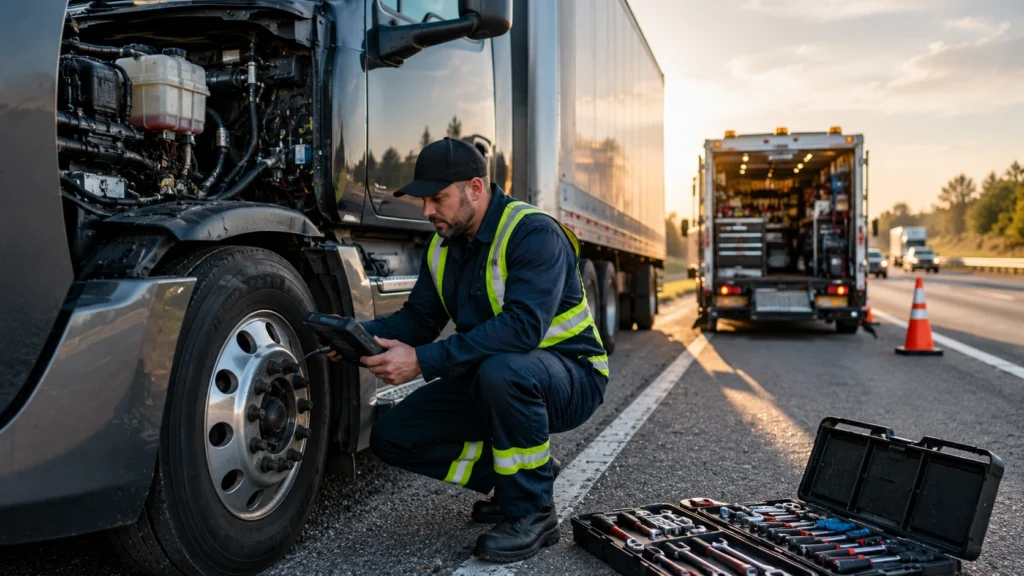
It’s worth distinguishing between two common scenarios. A roadside breakdown — especially on a highway — comes with its own urgency and safety considerations (covered in more detail below). A jobsite or yard breakdown is usually lower-risk in terms of traffic exposure, but can still cause costly downtime if equipment sits idle waiting on a tow. In both cases, on-site diesel repair is often the faster path back to operation.
Mobile Diesel Mechanic vs. Traditional Diesel Repair Shop
Neither option is universally better — the right choice depends on the situation.
Mobile service tends to make sense when:
- The vehicle can’t be safely driven to a shop
- Towing would add significant cost or delay
- The repair is diagnostic-friendly and doesn’t require shop-only equipment
- You need to minimize downtime for a single vehicle or across a fleet
A traditional shop may be the better option when:
- The repair requires a lift, alignment rack, or heavy teardown
- Specialized parts need to be sourced and the vehicle needs to sit for an extended repair
- The issue falls under manufacturer warranty work tied to a specific facility
Mobile diesel repair isn’t automatically cheaper or faster in every case — it depends on the complexity of the issue and what equipment the job requires. A good provider will tell you honestly if your repair is better suited to a heavy-duty truck repair shop.
Emergency and 24-Hour Mobile Diesel Service
Searches for a “24 hour mobile diesel mechanic near me” usually come from drivers dealing with a breakdown at night, on a weekend, or in the middle of a long haul. Many mobile diesel repair providers, including Diesel Works BTX, offer extended or around-the-clock availability specifically because diesel breakdowns don’t follow a 9-to-5 schedule.
That said, response times can vary based on your location, traffic conditions, weather, technician availability, and the complexity of the repair itself. Any provider that guarantees a specific arrival time without knowing these details should be treated with some skepticism — a trustworthy provider will give you a realistic estimate rather than a blanket promise.
What to Do While Waiting for a Technician
If you’re stopped roadside, safety comes first — see the dedicated safety section below. Have your location, vehicle details, and a description of the problem ready so the technician can prepare before arriving.
Finding a Mobile Diesel Mechanic Near Me
When evaluating a mobile diesel mechanic near me, a few factors are worth checking before you commit:
- Service area — do they actually cover your location or route?
- Availability — same-day, after-hours, or 24/7?
- Heavy-duty experience — have they worked on your type of vehicle or engine?
- Emergency capability — can they respond to roadside calls, not just scheduled visits?
- Services offered — confirm they handle the type of repair you need
- Diagnostic equipment — do they carry the tools needed for modern diesel systems?
- Reviews and reputation — look for a consistent track record
- Licensing and insurance — appropriate for commercial vehicle work
- Transparent estimates — willingness to explain pricing before starting work
- Fleet capability — relevant if you’re managing multiple vehicles
Diesel Works BTX, for example, is built around several of these criteria directly — heavy-duty diesel experience, on-site diagnostic equipment, and service coverage for both emergency and scheduled calls. When comparing diesel mobile mechanics in your area, it’s worth asking the same questions regardless of who you’re calling.
How Much Does a Mobile Diesel Mechanic Cost?
There’s no single price for mobile diesel repair — the final cost depends on several factors:
- Diagnostic fees for identifying the problem
- Labor, based on the complexity and time required
- Travel or service-call charges for the technician coming to you
- After-hours or emergency premiums, if applicable
- Parts, which vary by vehicle and availability
- Repair complexity, since some issues take longer to resolve than others
- Vehicle type, as larger or specialized equipment can affect cost
- Location, since travel distance and regional rates play a role
- Specialized diagnostic equipment, needed for certain electronic or emissions-related systems
Why Get an Estimate Before Work Begins
Because so many variables affect the final bill, it’s worth asking for a written or verbal estimate — and understanding the service-call and diagnostic fee structure — before a technician starts work. A provider willing to walk you through pricing upfront is generally a good sign of transparency.
How to Choose the Right Mobile Diesel Mechanic
Use this checklist when vetting a provider:
- Heavy-duty diesel experience, not just general automotive work
- Relevant certifications or qualifications for diesel systems
- Familiarity with your specific vehicle or engine type
- Modern diagnostic equipment on the service truck
- Emergency or after-hours availability, if you might need it
- A service area that actually covers where you operate
- Reasonable access to common parts
- Insurance coverage appropriate for commercial vehicle work
- Reviews or references that reflect consistent quality
- Clear, responsive communication
- Written estimates and invoices
- A warranty or workmanship policy, where offered
What Information Should You Give the Mechanic When You Call?
Providing accurate details upfront helps a technician arrive prepared and speeds up the actual repair. Before you call, try to have the following ready:
- Truck make, model, and year
- Engine type, if known
- Your current location (as precise as possible)
- A description of the symptoms
- Any dashboard warning lights that are on
- Whether the vehicle can be safely moved
- Any recent repairs or known issues
- VIN or unit number, especially for fleet vehicles
- Fleet or company information, if applicable
This kind of preparation can make the difference between a technician arriving with the right parts and tools versus needing a second trip.
How to Stay Safe During a Diesel Truck Breakdown
If you break down on a roadway, safety should come before troubleshooting:
- Move the vehicle to the safest available location — a shoulder, exit ramp, or rest area if possible
- Activate hazard lights immediately
- Use warning triangles or reflective devices if you have them and it’s safe to place them
- Stay alert to passing traffic, especially on highways
- Avoid attempting repairs alongside active traffic lanes
- Follow any applicable roadside safety procedures for your situation
- When the technician arrives, help create as safe a working environment as possible
These steps protect you and anyone assisting you, and they also make it easier for a technician to do the job safely once they arrive. Having access to reliable truck roadside assistance, like the commercial roadside service Diesel Works BTX offers in the Brownsville area, can make a stressful situation far more manageable.
Preventive Maintenance and Mobile Diesel Mechanics
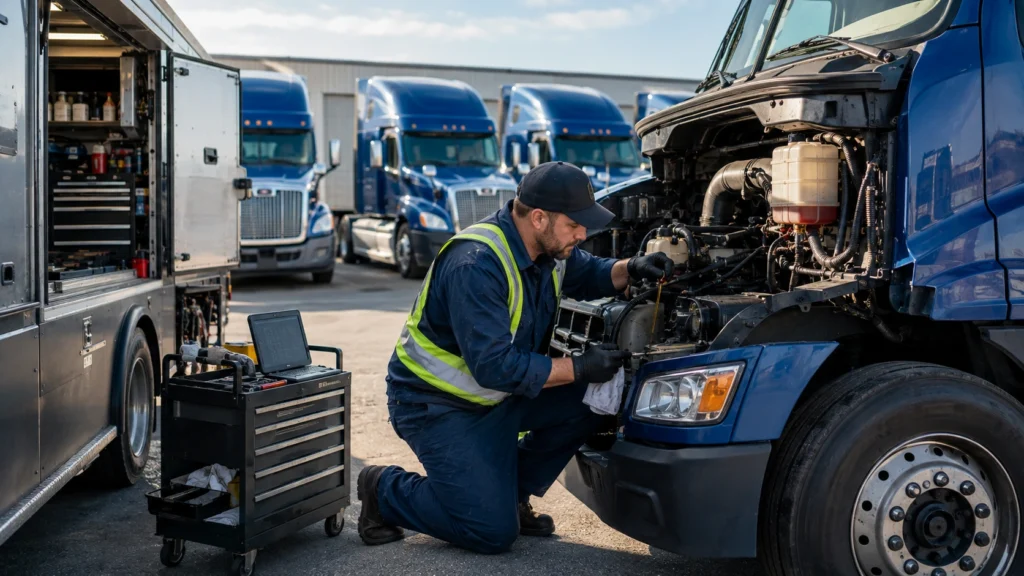
Mobile diesel mechanics aren’t just for emergencies. Routine inspections, fluid and filter service, and scheduled on-site maintenance can help catch small problems before they turn into breakdowns. For fleets in particular, a structured fleet maintenance program — where a technician handles multiple vehicles at a yard or terminal on a set schedule — can reduce the disruption of pulling trucks out of rotation for shop visits.
It’s worth noting that preventive maintenance reduces the likelihood of avoidable failures, but it can’t eliminate every possible breakdown. Mechanical issues can still occur even with a well-maintained vehicle.
Mobile Diesel Repair for Fleets and Businesses
Fleet managers face a different set of considerations than an individual owner-operator. Coordinating commercial truck repair across multiple vehicles and locations means thinking about:
- How quickly a technician can be dispatched across your service area
- Whether a provider can handle scheduled maintenance across several units, not just one-off emergencies
- How repairs are approved and invoiced when multiple vehicles are involved
- Communication — does the provider give clear updates so dispatch can plan around downtime?
Before approving a repair, it’s reasonable to ask for a diagnostic explanation, an estimate, and a timeline. A provider that handles fleet service accounts regularly, such as Diesel Works BTX’s fleet program in Brownsville, should be comfortable answering these questions as a standard part of the process.
Conclusion
Whether you’re dealing with a roadside emergency or planning ahead for fleet maintenance, understanding how mobile diesel repair works helps you make a faster, more informed decision when something goes wrong. Mobile service isn’t a replacement for every kind of shop work, but for a wide range of common emergency diesel repair needs, it offers a practical way to get back on the road without the cost and delay of towing.
Frequently Asked Questions
What does a mobile diesel mechanic do?
A mobile diesel mechanic travels to your vehicle’s location to diagnose and repair diesel engine, electrical, fuel, cooling, and other mechanical issues, instead of requiring the vehicle to be towed to a shop.
Is a mobile diesel mechanic cheaper than a repair shop?
Not always. Cost depends on the complexity of the repair, travel distance, and whether specialized shop equipment is needed. In many cases mobile service saves money by avoiding towing and downtime, but it isn’t universally cheaper.
Can a mobile diesel mechanic repair a semi-truck on the roadside?
Many roadside issues — like electrical failures, no-start conditions, and certain fuel or cooling problems — can be repaired on the roadside. More extensive semi-truck repair work may require towing to a shop.
How do I find a reliable mobile diesel mechanic near me?
Check service area coverage, heavy-duty diesel experience, availability, reviews, insurance, and whether they provide transparent estimates before starting work.
Do mobile diesel mechanics offer 24-hour or emergency service?
Many do, though availability and response times vary by provider and depend on factors like location, weather, and technician availability.
Do mobile diesel mechanics work with fleets and businesses?
Yes, many providers — including Diesel Works BTX — offer fleet maintenance programs and scheduled service across multiple vehicles.