A truck that sits in the shop costs you money. A truck that breaks down on US-77 with a full trailer costs a lot more. The frustrating part is that most breakdowns don’t come out of nowhere. A slow air leak, a tire running low, a belt starting to crack: each one gives a warning, and each is easy to catch if you know where to look.
That is exactly what a truck maintenance checklist is for. At Diesel Works, we repair diesel trucks and trailers in Brownsville every day, and the pattern never changes. The trucks that stay on the road are the ones with a routine behind them.
This guide breaks the job down by day, week, month, and year, then shows how to scale it up for a fleet. Use it as is, or adapt it to your own equipment.
Why a Truck Maintenance Checklist Is Worth the Time
Nobody loves paperwork at 5 a.m. before a long run. But a checklist does things your memory can’t.
- It catches small problems early: A cracked hose is cheap to replace. A blown hose on the highway can cook an engine.
- It keeps you inspection-ready: Roadside inspectors look at the same items a good checklist covers: brakes, tires, lights, steering, and more.
- It builds a service history: When you know exactly when the last brake job happened, you can plan the next one instead of guessing.
- It protects your schedule: Planned shop time is far cheaper than unplanned time on the shoulder.
Truck Maintenance Checklist by Frequency
Here is a maintenance checklist for trucks, organized by how often each task should happen. Treat it as a starting point. Your engine manufacturer’s service schedule, your duty cycle, and the age of your truck all matter, so adjust the intervals to fit.
1. Daily Pre-Trip Checks (5 to 10 Minutes)
- Walk around the truck: Look underneath for fresh oil, coolant, fuel, or DEF leaks.
- Tires and wheels: Check for low pressure, cuts, bulges, loose or missing lug nuts, and hub leaks.
- Lights and reflectors: Test headlights, brake lights, turn signals, markers, and the trailer connection.
- Fluid levels: Check engine oil, coolant, washer fluid, and DEF.
- Air brakes: Build pressure, listen for leaks, and watch the gauges.
- Steering, mirrors, and glass: Look for excess steering play, secure mirrors, a clean windshield, and working wipers.
- Safety gear and paperwork: Confirm your fire extinguisher and warning triangles are in place, then complete your driver vehicle inspection report.
2. Weekly Checks
- Check tire pressure with a gauge when the tires are cold, and look at tread depth and wear patterns. Under federal rules, steer tires need at least 4/32 inch of tread, and other tires need 2/32 inch.
- Clean and tighten battery terminals.
- Inspect belts and hoses for cracks, glazing, or soft spots.
- Drain moisture from air tanks if they don’t have automatic drains.
- Drain the fuel/water separator.
- Grease the fifth wheel, kingpins, and steering and suspension fittings as your manufacturer specifies.
3. Monthly or Every 10,000 to 15,000 Miles
- Engine oil and filter: Intervals for heavy-duty diesels vary widely by engine, oil, and workload, so follow your manufacturer’s guide. Severe duty means shorter intervals.
- Fuel and air filters: Replace them on schedule and check air filter restriction.
- Brakes: Measure lining thickness and check drums, slack adjusters, and brake chambers. Pulling, uneven wear, or a soft pedal calls for professional brake repair.
- Suspension and steering: Look at leaf springs, bushings, air bags, shocks, and king pins. Worn parts chew through tires, so don’t ignore leaning, bouncing, or wandering. Our suspension repair team can sort it out.
- Exhaust and aftertreatment: Check for leaks, DPF warnings, and DEF system faults.
- Electrical: Test alternator output and look over the wiring and trailer plug.
4. Quarterly and Annual Checks
- Annual DOT inspection, at least every 12 months
- Coolant test and flush
- Transmission and differential fluid service
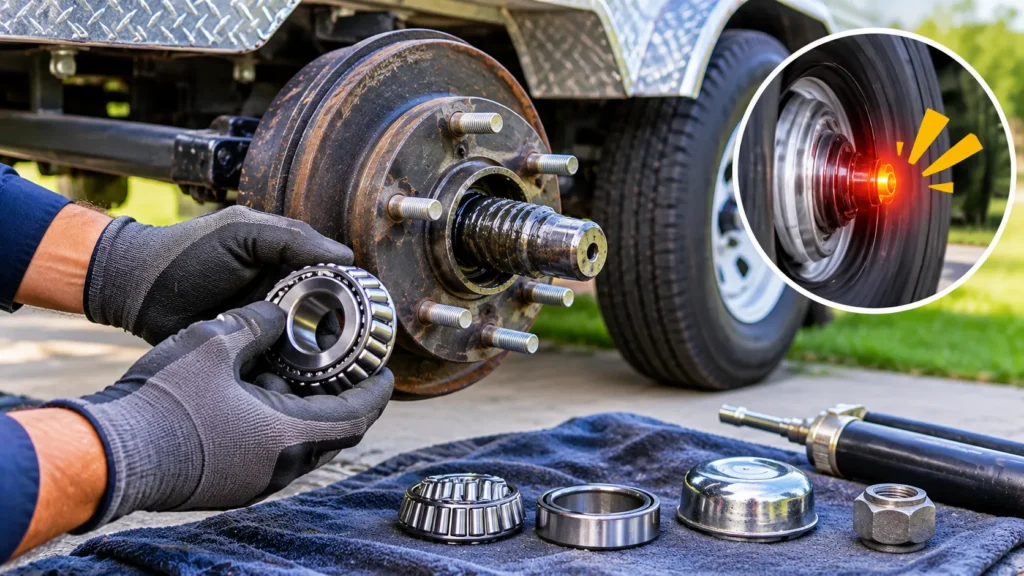
- Wheel bearings and seals
- Alignment check
- A/C and heater performance
- Full diagnostic scan for stored fault codes
If you’d rather not juggle all of this yourself, our preventive maintenance service covers oil changes, inspections, lubrication, and scheduled servicing.
Fleet Truck Maintenance Checklist: Scaling Up
A fleet truck maintenance checklist covers the same checks, but the challenge shifts from “what do I check” to “how do I stay consistent across every unit.” A few habits make the difference:
- Give every truck its own record: Track unit number, VIN, mileage or hours, and service dates.
- Set intervals by miles and by time: Whichever comes first triggers service.
- Assign ownership: Decide who performs pre-trips, who signs off, and who books shop time.
- Fix failures fast: A failed item should become a work order the same day, not a note that gets lost.
- Watch for patterns: If three trucks keep eating tires, look at alignment, loading, or routes instead of just replacing rubber.
- Schedule around operations: Book service during slow periods so trucks aren’t pulled off high-demand runs.
A good fleet maintenance checklist is only as useful as the follow-through behind it. If you’d like help with that part, our truck fleet service in Brownsville builds maintenance schedules around your fleet size, mileage, and operating conditions, and keeps detailed service records for every vehicle.
Fleet Vehicle Maintenance Checklist for Mixed Fleets
Most fleets run more than sleeper tractors. A fleet vehicle maintenance checklist works best when it has a shared core (tires, brakes, fluids, lights, leaks) plus add-ons for each vehicle type.
| Vehicle type | Add these checks |
| Semi tractors | Air system, fifth wheel, DPF and DEF, steering components |
| Box and straight trucks | Rear doors, liftgate, suspension under load, brake wear |
| Pickups and service vans | Oil changes, tires, brake pads, lighting |
| Trailers | Brakes, ABS, lights and wiring, doors, floors, landing gear |
For the trailer side, our trailer repair team handles brake systems, lighting, doors, roofs, and floors.
Free Fleet Vehicle Maintenance Checklist Template
You don’t need expensive software to get started. A simple fleet vehicle maintenance checklist template in Excel, Google Sheets, or even on paper works well if it captures the right information. Here is a layout you can copy:
| Unit # | Date | Mileage | Item checked | Pass / Fail | Notes | Tech initials |
| 12 | 03/04 | 412,300 | Steer tires | Pass | 6/32 tread | JR |
| 12 | 03/04 | 412,300 | Air leak test | Fail | Slow leak at rear chamber | JR |
Group your items into sections (exterior, engine bay, brakes, air system, electrical and cab) and add a column for the next service due. Print copies for the glove box or load the sheet onto a tablet. Whichever format you choose, keep every completed sheet. Over time, those records show you which trucks cost the most to run and why.
[Download Truck Maintenance Checklist PDF]
Heat and Border-Country Checks for South Texas Trucks
Trucks in the Rio Grande Valley work under conditions that national checklists rarely mention.
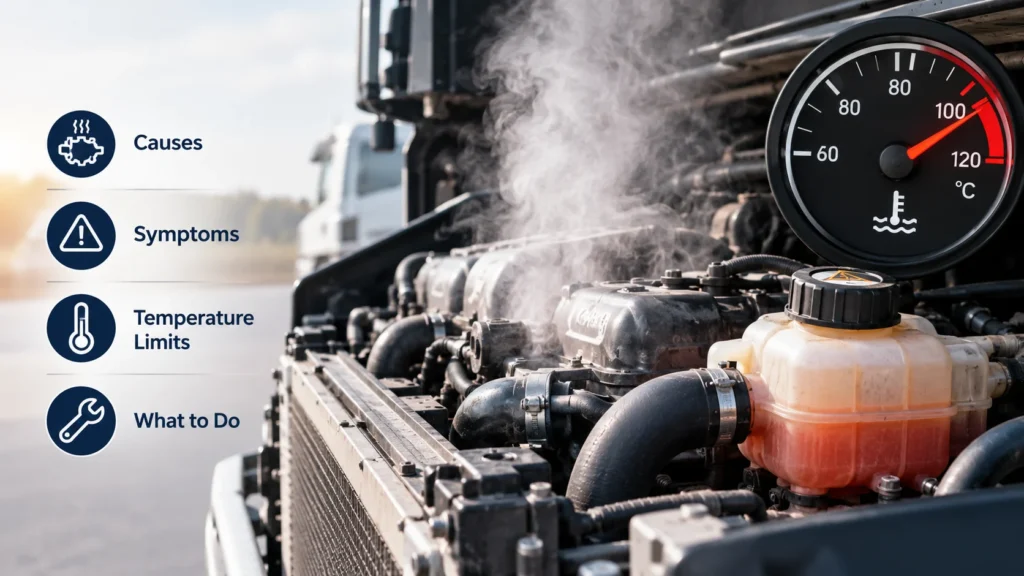
- Cooling system: Long summers put constant stress on radiators, hoses, water pumps, and fan clutches. Check coolant level and condition more often than the calendar says.
- Tires: Hot pavement raises tire temperatures and exposes weak casings. Check pressure in the morning, before the heat builds.
- Batteries: Heat shortens battery life. Test them before summer, not after a no-start.
- Brakes and clutches: Stop-and-go waits at border crossings and port gates wear brakes and clutches faster than steady highway miles.
- Humidity and corrosion: Coastal air is hard on electrical connectors and trailer plugs.
If a tire or battery gives out away from the shop, our roadside assistance team can come to you, and our tire services cover flats and replacements.
Common Problems We See in the Shop
In our shop, the same issues keep coming through the door:
- Air leaks: Worn air lines, fittings, and brake chambers cause slow leaks that get worse over time.
- Worn brake components: Pads, drums, and out-of-adjustment brakes are a top reason trucks fail inspection.
- Weak batteries: Often the cause of random electrical gremlins and no-starts.
- Overheating: Usually traced to low coolant, a failing water pump, or a clogged radiator. Ignoring it can lead to major diesel engine repair.
- King pin and bushing wear: Shows up as loose steering and uneven tire wear.
- Trailer lighting faults: Damaged wiring and bad grounds are common, and they are an easy ticket for an inspector.
Nearly all of these show up on a checklist weeks before they turn into a breakdown.
DIY or Diesel Mechanic: What to Leave to a Pro
Drivers can handle daily walkarounds, fluid top-offs, tire pressure checks, and basic visual inspections. Leave the following to a qualified diesel mechanic:
- Brake adjustment and air system repairs
- Engine diagnostics and fault code interpretation
- DPF, DEF, and other aftertreatment work
- Suspension, steering, and alignment
- The annual DOT inspection
The rule of thumb: if it affects braking, steering, or engine health, have a professional look at it.
How to Make Your Checklist Stick
The best checklist is the one people actually use. Keep it to one page for daily checks, put it where the driver will see it, and explain why each item matters. Review it after every breakdown and ask whether the checklist could have caught the problem. Then update it at least once a year as your equipment, routes, and loads change.
DOT Inspection and Record-Keeping Basics
Federal vehicle maintenance rules sit in Part 396 of the Federal Motor Carrier Safety Regulations. In plain terms, vehicles must be inspected, repaired, and maintained, drivers must report defects through a vehicle inspection report, commercial vehicles need a periodic inspection at least every 12 months, and maintenance records must be kept. Requirements vary by vehicle weight and type of operation, so confirm what applies to you at fmcsa.dot.gov. Keeping completed checklists on file makes all of this easier.
Frequently Asked Questions
1. How often should a truck be serviced?
It depends on the engine, the oil, and how you use the truck. A good approach is daily and weekly driver checks, plus a professional preventive maintenance visit based on your manufacturer’s schedule. Severe duty, like heavy loads or constant heat, calls for shorter intervals.
2. What should be on a daily truck inspection checklist?
Tires and wheels, lights, fluid levels, leaks, air brakes, steering, mirrors, and safety equipment, followed by a signed inspection report.
3. What is the difference between a pre-trip inspection and a fleet maintenance checklist?
A pre-trip inspection is a quick daily safety check by the driver. A fleet maintenance checklist covers scheduled service across every vehicle by mileage and time, and tracks repairs and follow-up.
4. How do I build a fleet vehicle maintenance checklist template?
Start with a shared core of tires, brakes, fluids, lights, and leaks. Add items for each vehicle type, then include columns for unit number, date, mileage, pass or fail, notes, and next service due.
5. Is preventive maintenance cheaper than waiting for repairs?
In most cases, yes. Planned service costs less than emergency repairs, plus late freight and lost time.
Keep Your Trucks Moving With Diesel Works
A checklist tells you what’s wrong. A good shop fixes it. If you’re in Brownsville, Harlingen, San Benito, or anywhere across our service areas, Diesel Works can handle your preventive maintenance, repairs, and roadside calls. Request a free estimate or call us at (956) 633-3235, and let’s keep your trucks on the road.