Heavy-duty trucks are built to haul large loads, travel long distances, and operate in demanding conditions. Because of this, heavy duty truck maintenance is more than a routine task. It is an essential part of keeping commercial vehicles safe, reliable, and ready for the road. Regular maintenance also helps identify potential problems before they become costly repairs or unexpected breakdowns.
However, how often do you maintain your high-performance truck?
There isn’t a specific mileage number that is applicable for all trucks. The best schedule is determined by the vehicle, its engine and manufacturer’s recommendations, the mileage operational conditions, loads, and the manner in which the vehicle is utilized. It is the Federal Motor Carrier Safety Administration (FMCSA) also obliges motor carriers to regularly check, repair, and maintain motor vehicles used for commercial purposes that are under their supervision.
To that end, the most effective approach is to combine the maintenance schedule of the manufacturer with regular inspections, and pay attention to warning signs that are early.
How Often Should Heavy Duty Trucks Be Maintained?
A heavy-duty truck should follow a consistent heavy duty truck maintenance schedule rather than waiting for something to break. The right interval depends on the truck, its application, mileage, engine hours, workload, and operating conditions.
The precise interval is determined by the type of truck and the application. A truck that spends the majority of its time hauling large loads could require different service intervals than one that has a more light or a different usage.
FMCSA doesn’t set a universal preventive maintenance timeframe for all commercial vehicles. The guidance clarifies the fact that repair, inspection and maintenance intervals may be specific to the vehicle and fleet.
So, your maintenance schedule must take into account:
- Manufacturer recommendations
- Mileage and hours of engine operation
- The kind of work that the truck does
- Weight of the load
- Conditions for driving
- Highway versus stop-and-go operation
- Condition and age of the vehicle
- Previous repair history
- Results of regular inspections
A regular calendar that is that is based on these elements is far more efficient than just telling, “Bring it in every X miles.”
A Practical Heavy Duty Truck Maintenance Schedule
A practical heavy duty truck maintenance plan combines daily inspections, manufacturer-recommended service, professional inspections, and timely repairs.The exact maintenance schedule will be determined by the car manufacturer and your maintenance plan It is helpful in thinking about the maintenance on different levels.
Daily or Pre-Trip Checks
Drivers play a crucial part in commercial maintenance of trucks. A quick inspection could reveal problems before they lead to roadside breakdowns.
When operating a commercial vehicle drivers must be aware of obvious safety issues and mechanical problems that could cause problems, such as:
- Wheels and tires
- Brakes
- Reflectors and lights
- Steering components
- Suspension components
- Leaks in fluids
- Mirrors and other equipment to improve visibility
- Equipment for coupling
- Air system concerns
A quick check of five minutes might not seem like an important maintenance task however, ignoring a noticeable issue could turn a simple repair into a bigger problem.
Yes, a truck warning light is typically more helpful than pretending you didn’t know about it.
Every Service Interval: Follow the Manufacturer’s Schedule
The manufacturer’s schedule should serve as the foundation of your heavy duty truck maintenance program.
Based on the type of vehicle The scheduled maintenance can comprise the service of engine oil and filter as well as air filters, fuel filters as well as inspections of lubrication and examinations of the main car systems.
Do not copy the maintenance schedule of another truck just because it’s the same general design. Specifications for the engine and components operating conditions, and the requirements for service may differ.
For instance, EPA guidance on diesel particulate filters (DPFs) states that maintenance requirements may depend on factors such as the engine condition and emissions, regeneration as well as operating condition.
This is why the information provided by the manufacturer as well as the actual data from your vehicle’s operating system will guide your plan.
Every Few Months: Review the Truck’s Condition
Regularly scheduled inspections provide technicians with the chance to go beyond the basic oil and filter service.
A professional inspection may assist in identifying wear or issues in areas like:
Brakes
Brake components undergo significant strain in commercial vehicles with a heavy load. Technicians must inspect the braking system in accordance to the requirements for maintenance of the vehicle as well as the applicable regulations.
Tires and Wheels
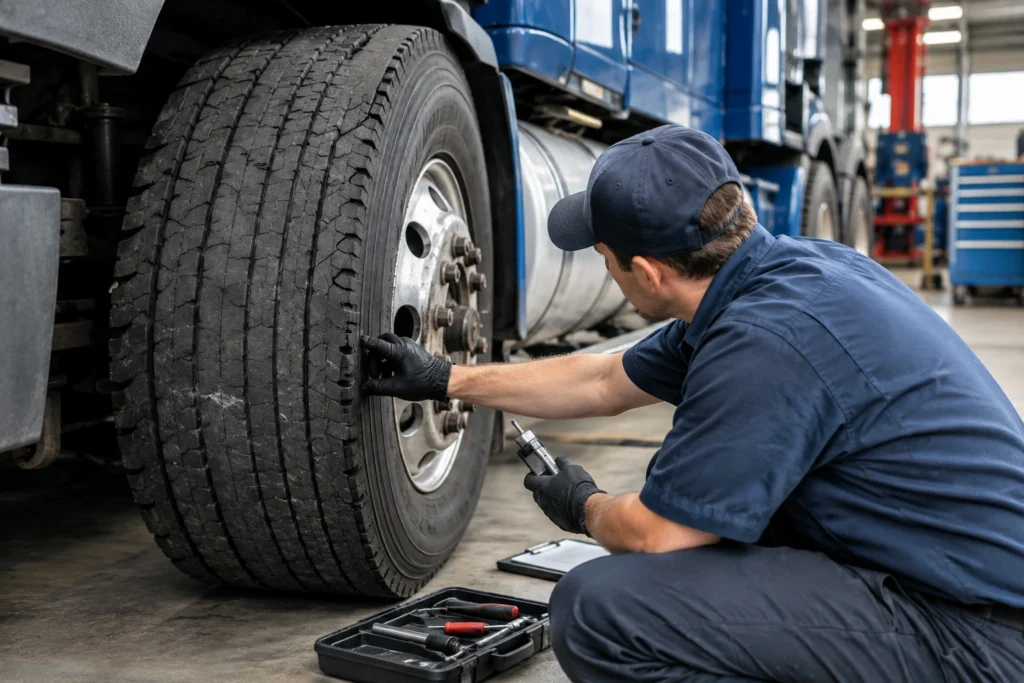
The condition of the tires affects the safety, handling, and reliability. Inspections on a regular basis should be looking for wear, damage inflator issues, and other issues.
Suspension
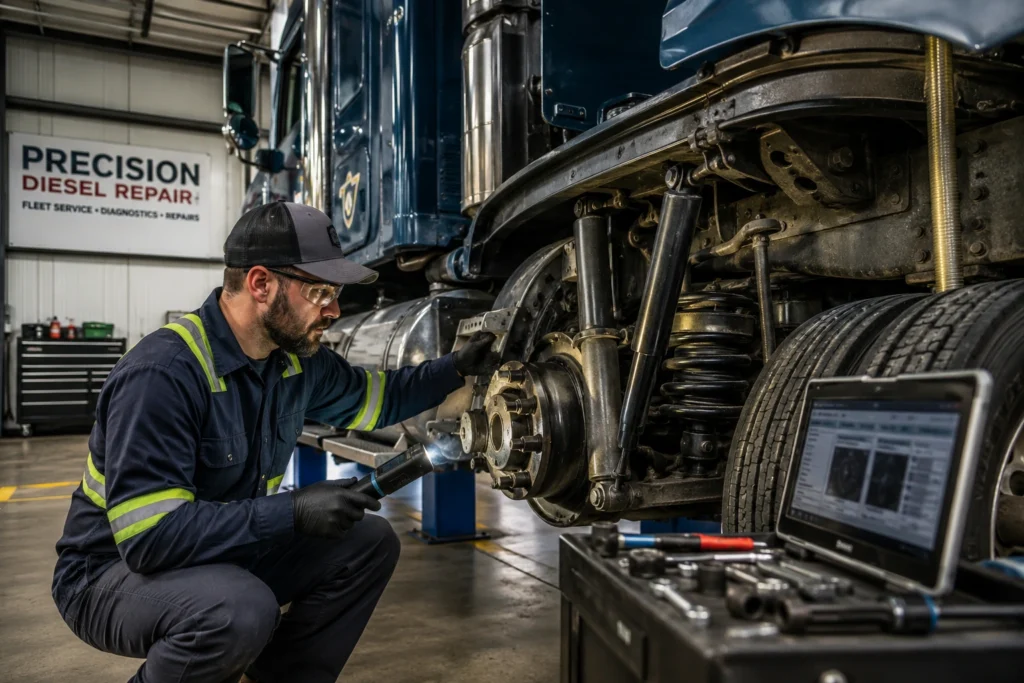
Suspension components to support the vehicle and ensure the proper handling. The suspension parts that are damaged or worn out must not be overlooked.
Steering
The steering system requires regular maintenance as problems can impact the vehicle’s control.
Electrical Systems
Lighting, batteries, wiring and other electrical parts may develop issues over time. A timely diagnosis can stop the issue from developing into a bigger repair.
FMCSA specifically mentions certain parts like suspension systems wheels, axles, wheels, steering systems, rims and other safety-related equipment, as components of maintenance for commercial vehicles. specifications.
Don’t Forget the Annual Inspection
Routine maintenance and periodic inspections are not the same thing.
According to FMCSA guidelines commercial motor vehicles typically need a regular inspection at least per 12 months. The inspection must include all relevant items of the standards for federal inspections.
Imagine it in this in this way:
Maintenance ensures that the truck is in good working order.
The regular inspections check whether the vehicle is in compliance with the safety standards applicable to it.
You’ll must have both.
When Should You Schedule Truck Maintenance Sooner?
A maintenance plan should not stop you from taking care of a problem earlier.
If your driver observes something that isn’t normal, make an inspection, instead of just waiting until the next scheduled service.
Signs of danger could include:
- Unusual engine noises
- Engine performance is decreased
- Excessive smoke
- Leaks of fluid
- Uneven tire wear
- Problems with brakes
- Steering changes
- Suspension problems
- Warning light
- Strange vibrations
- The difficulty of starting
- Increased consumption of oil or other fluids
The best solution is contingent upon the issue. Certain issues require immediate attention while others allow you to plan the service.
The key point is: don’t let a well-known issue become tomorrow’s problem.
How Operating Conditions Affect Maintenance Frequency
Two trucks that have similar mileage may not require identical maintenance schedules.
A truck that is operating under demanding conditions could experience wear that is different when compared to a truck operating in less demanding conditions.
Consider:
Large loads Heavy hauling frequently could put additional stress on brakes, tires suspension components, drivetrain, and many other systems.
Stop-and-go driving Rapid acceleration and stopping may result in different wear patterns in comparison to steady highway driving.
Long-distance operation Highway vehicles can accumulate considerable mileage and engine hours so scheduled maintenance is crucial.
In hot or difficult conditions: Operating conditions can affect the cooling systems and tires, fluids, and many other components.
Fleet use: Trucks that operate constantly may require a careful schedule to avoid maintenance being delayed.
A proper maintenance program should be able to respond to the way that the truck actually operates, not only what the odometer indicates.
Why Preventive Maintenance Matters
The goal of heavy duty truck maintenance isn’t simply to replace components. Preventive maintenance helps identify wear and potential problems before they develop into larger repair issues.
The practice of preventive maintenance can help you spot issues before they turn into major problems. Fleet operators also have a an opportunity to plan maintenance instead of having to deal with the possibility of an unexpected breakdown.
FMCSA describes a systematic approach to inspection, repair and routine maintenance in a regularly or programmed program created to keep vehicles in a safe and operating condition.
A good record is also essential. EPA guidelines for maintenance of diesel particulate filters suggests keeping cleaning and service documents, while FMCSA has specific reports on maintenance, inspections and records to be kept for the applicable vehicles and carriers.
A good maintenance record will assist you with questions like:
- When was the last time that the truck was checked?
- What kind of work was completed?
- What parts were changed?
- Were problems identified during inspection?
- When will the next service be due?
- Have you encountered the same issue previously?
A good record can turn maintenance the hazard of guesswork to a repeatable process.
What About Heavy Equipment Repair?
Heavy trucks typically share maintenance guidelines with other heavy-duty equipment however, you shouldn’t assume that all equipment is on the same maintenance schedule.
Heavy Repair of Equipment must adhere to the specifications provided by the manufacturer of equipment operational conditions, as well as the requirements for service.
The same rule applies to trucks: utilize the correct maintenance schedule for your specific vehicle instead of going with a general schedule online.
When Should You Use Professional Truck Maintenance Services?
Routine inspections of drivers are essential but they don’t substitute for professional services.
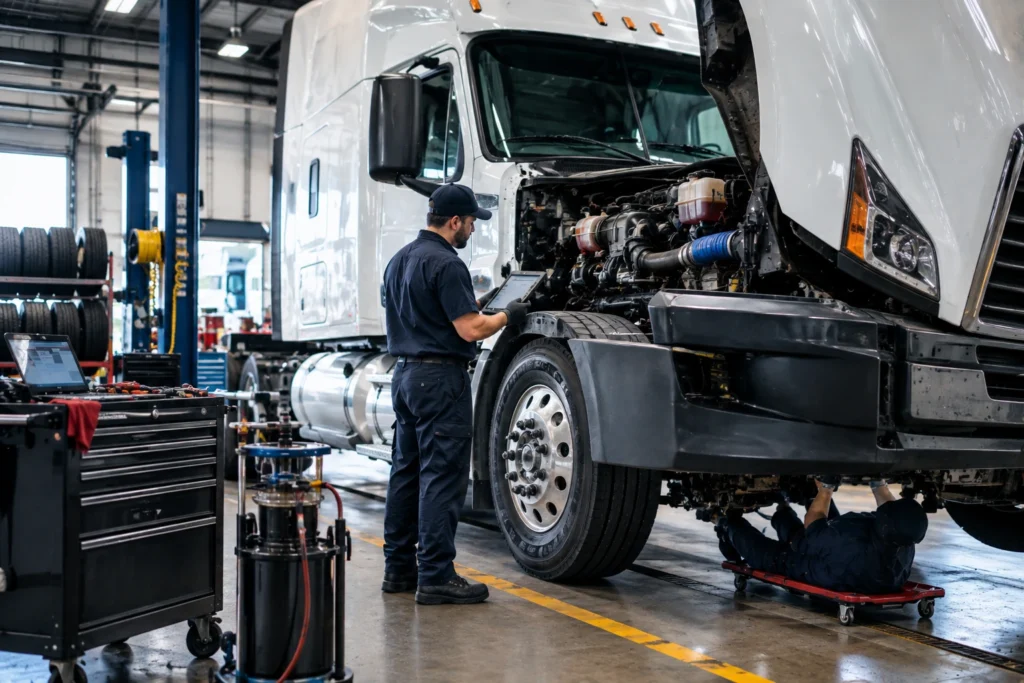
Professional maintenance of trucks will provide an in-depth inspection and assist in identifying mechanical problems which are difficult to detect in a walk-around.
This is especially crucial in the event of frequent problems or warning lights, strange sounds, leaks of fluid or performance issues, or any other changes in the handling.
If the issue is one that requires repair Professional High-Duty Truck Repair will address the root problem instead of simply dealing with the symptom.
For fleet managers who have scheduled maintenance, combining it with professional inspections can help to plan the time between maintenance and ensure that vehicles are working.
Heavy Duty Truck Maintenance in Brownsville
For businesses operating commercial trucks in Brownsville, heavy duty truck maintenance should be treated as an ongoing part of fleet management, not something to consider only after a breakdown. A solid maintenance plan helps keep vehicles dependable and ready for work.
A solid maintenance plan must consist of:
- Daily driver inspections
- Manufacturer-recommended service
- Regular professional inspections
- Quick repairs
- Maintaining accurate records of maintenance
- Annually required inspections
- Adjustments are based on the actual operating conditions
Local truck owners and fleet managers working with a company that is familiar with commercial vehicles can help make maintenance easier to manage.
Diesel Works BTX provides truck and trailer repair for commercial vehicles located in and in the vicinity of Brownsville, Texas.
Final Thoughts
The question is, how often should you conduct heavy-duty maintenance on your truck?
The most straightforward answer is to Follow the manufacturer’s maintenance program as well as a consistent inspection schedule, and then adjust services based on the way in which the truck is being utilized.
Do not rely solely on one mileage figure for each vehicle. A well-planned maintenance program takes into account miles, engine hours and workload operating conditions, vehicle age, and any previous repairs history.
Don’t just wait until a breakdown occurs in order to let you know that your vehicle requires attention. Regular maintenance might be time-consuming and require planning however, an unexpected breakdown on the road could create a bigger issue for a driver and fleet or business.
Make sure the inspections are consistent Keep the records in order and take care to address warning signs promptly. This is how maintenance of trucks becomes an essential element of keeping heavy-duty trucks secure, reliable and ready to work.
FAQs
When should the heavy-duty vehicles be maintained?
There isn’t a single timeframe for all heavy-duty trucks. The manufacturer’s suggested schedule should be followed and modify it according to the amount of mileage, hours on the engine as well as operating conditions, workload and the results of inspections. FMCSA stipulates that maintenance intervals are specifically tailored to fleets and vehicles.
What is the most important thing to check during heavy duty truck maintenance?
During heavy duty truck maintenance, technicians may inspect the engine, fluids and filters, brakes, wheels, tires, suspension, electrical systems, and other vehicle-specific components.
Are annual inspections the same as regular maintenance?
No. A periodic annual inspection is a requirement of the law for commercial vehicles that are in use While regular maintenance is a continuous process that is designed to ensure that the vehicle is in a safe and efficient operating state.
Do operating conditions alter the schedule of maintenance for a truck?
Yes. High loads, miles engine hours, the duty cycle and many other operating conditions may impact maintenance needs. Your schedule must reflect how your truck is being used.
Why is it important to keep maintenance records?
Maintenance records allow you to track completed work, pinpoint frequent problems, and identify when maintenance is due. They also help ensure conformity with the applicable records for inspections and maintenance requirements.