Introduction
Suspension problems are a common concern for commercial trucks that operate under the most extreme road conditions. Long-distance driving, significant payloads, rough roads, and everyday heavy-duty use put serious stress on all truck components, especially the suspension system. Over time, these conditions can lead to worn parts, reduced performance, and other suspension-related issues that may affect safety and reliability.
The functioning of a well-working suspension system is not limited to just providing a nice ride. It also influences the stability of the vehicle, alleviates the weight, increases the handling, and ensures a proper contact of tires with the road. Neglect of minor problems in this aspect of the vehicle can create a plethora of expensive maintenance issues and safety troubles.
Truck owners and fleet managers tend to overlook the first signals of the problems with a suspension system, since it works until ultimate failure. However, if they know about the most common suspension-related problems and understand when it is high time to call a specialist, it can prevent serious issues.
Diesel Works BTX is an organization helping truck owners to spot the problems related to a vehicle’s suspension system thanks to professional inspections, placing correct diagnoses, and providing effective sources of assistance.
Why a Healthy Suspension System Matters in Commercial Trucks
The suspension system in a commercial vehicle is constructed to carry heavy loads and provide stability for controlling the vehicle. It acts as a connection between the vehicle frame and the wheels and reduces the impact of the road while in motion through bumpy ground or potholes.
Keeping the suspension system in good shape ensures:
Better steering control
More comfortable ride for drivers
Equal wear on tires
Correct distribution of loads
Not too much strain on other components of the truck
Save up on ride quality on highways and at job sites
However, suspension parts not in good working order lead to the trouble of controlling the vehicle, faster wearing of tires, and diminished performance.
Common Suspension Problems in Commercial Trucks
Regular suspension troubles in the commercial vehicles involve a number of suspension systems which comprise shocks, springs, bushings, air suspension components and mounting hardware. The malfunction of at least one of these components causes the malfunctioning of the whole system.
Some of the typical suspension fails, faced by the truck operators are:
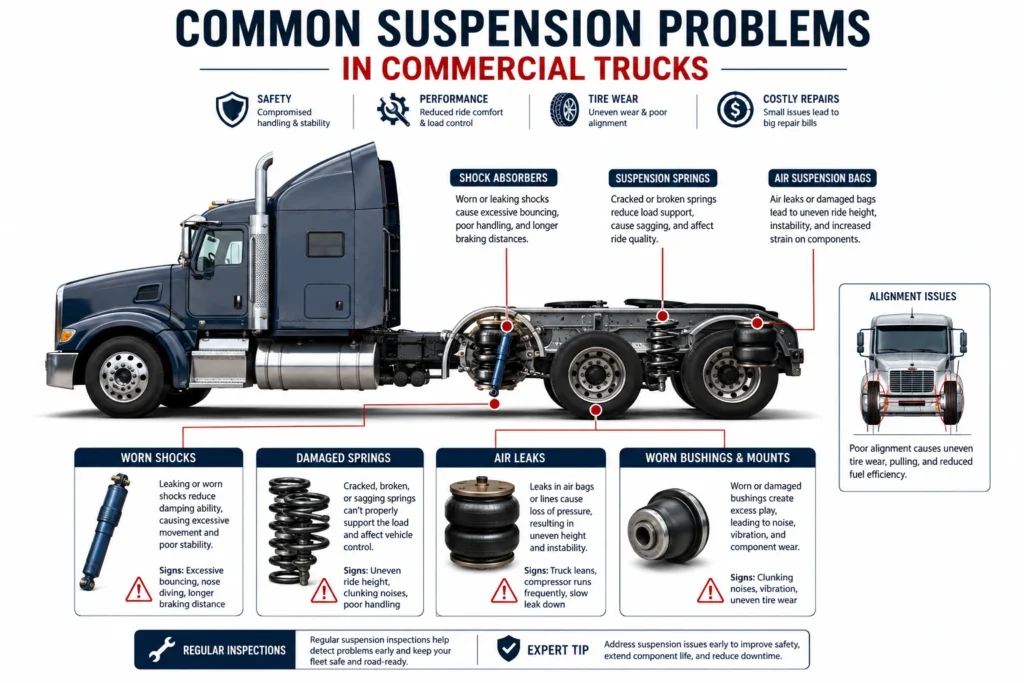
1. Worn or Damaged Shock Absorbers
Shock absorbers play an important role in controlling suspension movement. They prevent excessive bouncing and help keep the tires connected to the road.
Over time, shocks can lose their ability to properly control movement due to constant vibration, heavy loads, and road conditions.
Common signs of bad shocks include:
- Excessive bouncing after hitting bumps
- Poor handling during turns
- Longer stopping distance
- Uneven tire wear
- Increased vibration while driving
Driving with worn shocks can place additional stress on other suspension components and reduce overall vehicle stability.
2. Broken or Weak Suspension Springs
Suspension springs support the weight of the truck and help maintain proper ride height. In commercial trucks, springs experience extreme pressure because they regularly carry heavy loads.
Some common causes of spring failure include:
- Overloading the truck
- Metal fatigue from long-term use
- Corrosion
- Frequent driving on rough roads
A damaged spring may cause the truck to sit unevenly or affect how weight is distributed across the axles.
If you notice your truck leaning to one side or experiencing unusual ride height changes, it may be a sign of a spring-related suspension issue.
3. Worn Suspension Bushings and Mounts
Bushings are small but important suspension components that reduce vibration and allow controlled movement between suspension parts.
When bushings wear out, they may create excessive movement between components and lead to additional damage.
Common signs of worn bushings include:
- Clunking or knocking sounds
- Increased vibration
- Loose suspension movement
- Uneven tire wear
- Poor handling
Ignoring worn bushings can allow other suspension parts to experience unnecessary stress.
4. Air Suspension System Problems
Many modern commercial trucks use air suspension systems because they provide better ride quality and load control. However, air suspension components can develop problems over time.
Common air suspension issues include:
- Air leaks
- Damaged air bags
- Faulty leveling valves
- Compressor problems
- Incorrect ride height
A failing air suspension system can affect truck stability and cause uneven weight distribution. Regular inspections are important because small air leaks can eventually lead to larger system failures.
5. Suspension Alignment Issues
Proper alignment is essential for commercial trucks because it affects steering performance, tire life, and fuel efficiency.
Suspension alignment problems can happen due to:
- Worn suspension components
- Damaged mounting parts
- Heavy impacts
- Improper repairs
Signs of alignment-related suspension issues include:
- Truck pulling to one side
- Uneven tire wear
- Steering problems
- Increased tire replacement costs
Addressing alignment problems early can help protect your tires and reduce unnecessary maintenance expenses.
How to Know If Your Suspension Is Bad
Many truck owners ask, “how to know if suspension is bad?” The answer depends on recognizing the warning signs before a small issue becomes a major repair.
Here are some common indicators of a bad suspension system:
Uneven Tire Wear
If your tires are wearing unevenly, the suspension may not be distributing weight correctly. Damaged shocks, worn bushings, or alignment problems can contribute to irregular tire wear.
Excessive Truck Bouncing
A truck that continues bouncing after hitting bumps may have weak shocks or other suspension problems.
Unusual Noises
Clunking, knocking, or squeaking sounds from underneath the truck can indicate worn suspension components.
Uneven Ride Height
If one side of the truck sits lower than the other, it may indicate a damaged spring, air suspension problem, or another suspension failure.
Steering and Handling Problems
Difficulty controlling the truck, especially during turns or highway driving, can be a warning sign that suspension components need inspection.
Knowing how to know if your suspension is bad allows truck owners to address problems before they create expensive downtime.
Why Professional Suspension Diagnostics Are Important
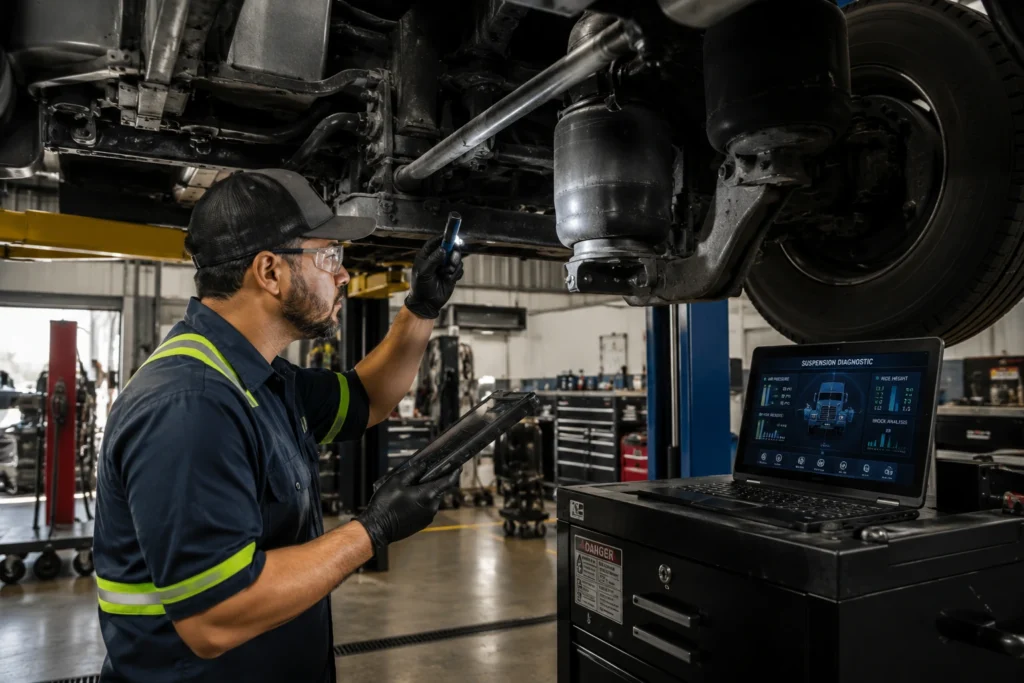
A suspension problem is not always easy to identify with a quick visual inspection. Many components work together, meaning one damaged part can create symptoms that appear to come from another area.
A professional suspension diagnostic inspection helps technicians evaluate:
- Shock absorber condition
- Spring damage
- Air suspension performance
- Suspension mounting points
- Bushings and joints
- Alignment concerns
At Diesel Works BTX, our technicians use experience and proper inspection methods to identify the actual cause of suspension issues instead of only treating visible symptoms.
Professional diagnostics help save time, reduce unnecessary repairs, and keep commercial trucks operating reliably.
Why Ignoring Suspension Issues Can Become Expensive
Many fleet owners delay suspension repairs because the truck is still running. However, ignoring suspension problems can lead to bigger issues.
A failing suspension system may cause:
- Faster tire wear
- Reduced fuel efficiency
- Increased driver fatigue
- Poor vehicle control
- Damage to other components
- Unexpected breakdowns
For commercial trucks, downtime directly impacts productivity. Addressing suspension problems early can help avoid larger repair expenses.
If you are concerned about repair expenses, understanding factors that influence Suspension Repair Cost can help you plan maintenance decisions and avoid unexpected costs.
How to Prevent Suspension Problems in Commercial Trucks
Regular maintenance is the best way to reduce suspension failures.
Truck owners and fleet managers should:
Schedule Regular Inspections
Routine inspections help identify worn parts before they fail.
Check Suspension Components During Maintenance
Technicians should inspect springs, shocks, bushings, and air suspension components regularly.
Avoid Overloading Trucks
Excessive weight puts additional stress on suspension parts and can shorten component life.
Pay Attention to Warning Signs
Do not ignore unusual noises, vibration, uneven tire wear, or handling changes.
Maintain Proper Tire Condition
Healthy tires work together with the suspension system to improve safety and performance.
Trust Diesel Works BTX for Commercial Truck Suspension Repair
Commercial truck suspension problems require proper diagnosis and professional repairs. Whether your truck has worn shocks, damaged springs, air suspension concerns, or other suspension issues, getting the problem checked early can prevent costly downtime.
At Diesel Works BTX, we provide dependable inspections and repair solutions for commercial trucks. Our experienced technicians understand the demands placed on heavy-duty vehicles and help keep your fleet running safely.
From identifying the cause of suspension problems to completing reliable repairs, our team is ready to support your truck maintenance needs.
For expert inspections and a professional Suspension Repair Service, contact Diesel Works BTX today and keep your commercial truck performing at its best.
Conclusion: Keep Your Commercial Truck Suspension in Top Condition
In order to make sure that the commercial truck runs smoothly and safely, having a dependable suspension system is a must. Problems like faulty shocks, worn springs, malfunctioning air suspension system, and defective bushings can negatively affect the truck’s operations.
By learning the suspensions issue signals and making regular inspections, you can avoid major malfunctions and repairs in the future.
If you have noticed weird noises, uneven tire wear, inappropriate handling or any changes in ride quality, don’t hesitate to turn to a reliable company for professional inspection.
Frequently Asked Questions About Commercial Truck Suspension Problems
What are the most common suspension problems in commercial trucks?
The most usual suspension issues observed in commercial vehicles include shock absorber wear, spring damage, bushing wear, air suspension problems, and alignment issues. These issues may affect truck balance, tire lifespan, control, and driving safety. Scheduled maintenance allows spotting these issues before they become serious and costly.
How do I know if my truck suspension is bad?
Bad suspension may be suspected if problems such as bounce too much, deformity of tires, strange sounds, problems with steering, heights that are not consistent with norms, or increased vibration occur during vehicle operation. To identify the real reason of the problem, suspension should be examined by the specialists.
How often should commercial truck suspension be inspected?
Regular checks on commercial truck suspension systems are necessary as they are a vital part of the maintenance process, especially for heavy-duty trucks, trucks used for long-distance trips, or those that carry heavy loads. If done regularly, checks will help in identifying worn-out parts and avoid breakdowns.
Can suspension problems affect truck tires?
Indeed, suspension difficulties can greatly impact tire effectiveness. Defective shocks, broken springs, and misalignments can lead to irregular tire wear, decreased tire life, and higher cost. Keeping your suspension in good condition will improve tire efficiency and safety.
Why is a professional suspension diagnostic important?
A qualified suspension diagnostic can help you uncover issues that may hide from basic inspection techniques. Highly qualified technicians can assess the suspension system, pinpoint your cause of problem, and offer you appropriate solving of the problems identified in suspension system.
Can I continue driving a truck with suspension issues?
It is not advisable to drive with a malfunctioning suspension system because a damaged suspension creates problems in steering, braking, and safety. Fixing problems early can help avoid bigger repairs and save you time without your car.
How much does commercial truck suspension repair cost?
The expense of getting a suspension repair done will depend on various aspects, such as the components that have been damaged, type of truck, relevant labor costs and how serious the problem is. A professional evaluation can help clarify the nature of the job and provide a more accurate estimate of costs.