If your truck is bouncing more than usual, pulling to one side, or making a clunking noise over every bump, you’re probably asking one question: how much does a suspension repair cost? The honest answer is “it depends” — but that doesn’t mean you can’t get a clear picture of what drives the price up or down. Suspension repair costs vary based on the vehicle, the specific component that’s damaged, labor rates, how severe the problem is, and whether you’re driving a standard passenger vehicle or a heavy-duty commercial truck.
This guide breaks down everything that affects suspension repair pricing, walks through the components most likely to fail, and explains what truck owners and fleet operators should expect that passenger vehicle owners typically don’t.
How Much Does a Suspension Repair Cost?
There’s no single number that applies to every vehicle or every repair, because “suspension repair” can mean anything from replacing one worn bushing to rebuilding an entire air suspension system. In general, minor repairs — like replacing a single bushing or a worn sway bar link — tend to cost far less than major component replacement, such as a full strut assembly, a leaf spring pack, or an air suspension compressor.
Heavy-duty and commercial trucks typically sit at the higher end of any suspension repair estimate. Their components are built to handle more weight and stress, which usually means larger parts, more labor time, and sometimes specialized equipment that a standard passenger-vehicle shop may not have on hand.
Because pricing shifts so much by region, vehicle make and model, and shop labor rates, the most reliable way to get an accurate number is a hands-on inspection and a written estimate. If you’re searching for ballpark figures online, treat them as a starting point rather than a quote, and verify anything specific against a current, reputable source or a direct estimate from a shop like Diesel Works BTX.
Suspension Repair Cost Breakdown
Several variables combine to determine what you’ll actually pay for a suspension repair. Understanding them helps you make sense of an estimate instead of just seeing a total and wondering where the number came from.
Type of Suspension Problem
A worn bushing or a squeaky sway bar link is a very different job than a snapped leaf spring or a collapsed strut. Minor wear-and-tear issues are generally quicker and cheaper to address than sudden component failures.
Damaged Suspension Components
Cost is tied directly to which part failed. Some components are simple bolt-on replacements; others require disassembly of multiple connected parts just to reach the damaged piece.
Parts and Replacement Costs
The choice between original equipment and aftermarket parts, along with regional part availability, affects the total. Some components are stocked locally and installed the same day; others may need to be special-ordered.
Labor Costs
Labor rates differ from shop to shop and region to region. A repair that’s straightforward on paper can still take longer in practice if rusted bolts, seized hardware, or tight clearances slow the technician down.
Vehicle Type and Weight
Heavier vehicles put more stress on suspension components, and their replacement parts are typically built to a higher load rating. This is a major reason truck suspension repair tends to cost more than the same type of repair on a compact passenger car.
Repair Complexity
Some jobs are self-contained. Others require a wheel alignment afterward, or reveal additional worn parts once the technician gets a closer look — both of which add to the final bill.
Location and Shop Rates
Labor rates in a busy metro area can differ noticeably from a smaller regional market. It’s worth comparing local estimates rather than assuming a national average applies to you.
Emergency or Mobile Repair
If a suspension component fails on the road and you need urgent or mobile service, expect that convenience to come with an added cost — this is especially relevant for commercial trucks that can’t afford extended downtime.
Common Suspension Components That May Need Repair
Your suspension system is made up of several parts working together, and the specific component involved can significantly change the total repair bill.
- Shock absorbers — control how your vehicle reacts to bumps and dips; wear here often shows up as excessive bouncing.
- Struts — combine a shock absorber with structural support for the vehicle’s weight, common on many passenger vehicles.
- Leaf springs — layered steel springs used heavily in trucks to support heavier loads.
- Coil springs — the springs found in most passenger vehicle suspension setups.
- Air suspension components — increasingly common in trucks and higher-end vehicles, using pressurized air bags instead of traditional springs.
- Control arms — connect the suspension to the frame and allow controlled wheel movement.
- Bushings — small rubber or polyurethane parts that cushion suspension joints; inexpensive individually, but worn bushings can cause noticeable handling issues.
- Ball joints — pivot points that allow the wheels to steer and move with the suspension.
- Suspension mounting components — the brackets and hardware that hold everything in place.
- Heavy-duty truck suspension components — larger, reinforced versions of the parts above, built for higher weight capacity.
A failure in a small, inexpensive part like a bushing can sometimes cause bigger downstream problems if it’s left unaddressed, which is part of why early diagnosis matters.
Truck Suspension Repair Costs
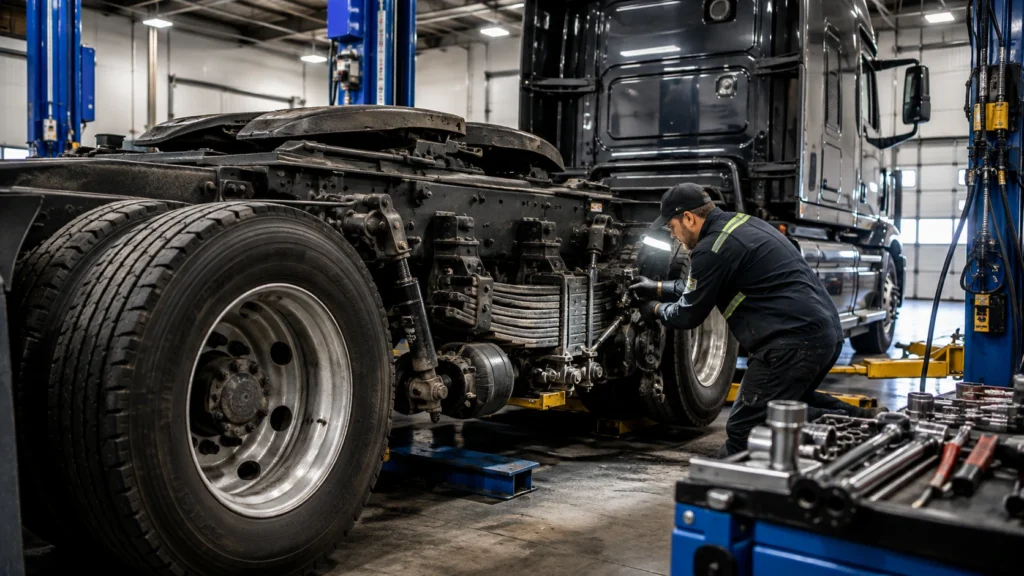
Commercial and heavy-duty trucks generally have different suspension needs — and different repair costs — than standard passenger vehicles. Trucks are built to carry heavier loads, tow trailers, and in many cases cover more daily mileage, all of which puts additional stress on suspension components.
Heavy-duty suspension systems are engineered for higher weight capacity, which means the parts themselves are larger and often more expensive to source and install than passenger-vehicle equivalents.
Leaf spring problems are common in trucks, particularly cracking or sagging from consistent heavy loads. A full leaf spring pack replacement is typically more involved than a passenger-vehicle coil spring swap.
Air suspension issues — including slow leaks or compressor failure — are increasingly relevant as more trucks adopt air-ride systems for a smoother, more load-adjustable ride.
Shock absorber replacement on a truck often involves heavier-duty units designed for the added weight, which can affect both parts cost and labor time.
Suspension bushings on trucks wear faster under heavier and more frequent loads, particularly for vehicles used commercially.
Axle and suspension-related problems can also compound repair costs, since issues in one area sometimes point to related wear elsewhere in the system.
Labor and parts considerations for commercial trucks often include specialized parts, longer labor times due to vehicle size, and — for fleet operators — the added cost of downtime. A truck that’s out of service isn’t just a repair bill; it’s lost operating time. Diesel Works BTX works with truck and fleet owners who need an accurate, no-surprises estimate before repairs begin.
Signs You May Need Suspension Repair
Catching suspension problems early usually keeps repair costs lower. Watch for:
- Uneven tire wear
- Excessive bouncing after hitting a bump
- The vehicle pulling or drifting during turns
- Uneven ride height, with one side sitting lower than the other
- Excessive body roll while cornering
- Clunking or unusual noises over bumps
- Visibly sagging suspension
- Poor handling or delayed steering response
- Visible damage to suspension components
- Air suspension losing pressure overnight or while driving
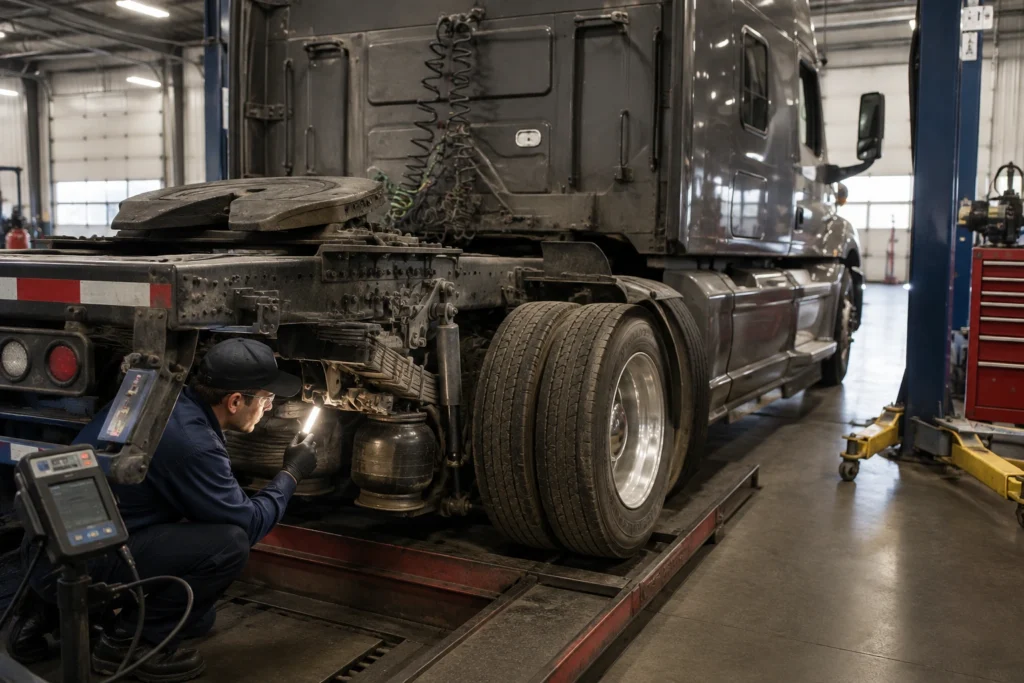
Some of these — like visible damage, sagging, or a sudden loss of ride height — warrant a prompt professional inspection rather than a wait-and-see approach. Others, like minor noise, are still worth addressing before they progress into a larger repair.
What Happens If You Ignore Suspension Problems?
Delaying suspension repair rarely makes the problem go away, and it often leads to further complications:
- Reduced handling and stability, particularly during sudden maneuvers
- Accelerated, uneven tire wear, which adds tire replacement to your expenses
- Additional component damage, since one worn part often stresses the parts around it
- Reduced braking performance, as suspension geometry affects how evenly the vehicle stops
- Poor overall ride quality
- Increased repair costs, since a small fix today can become a larger job later
- Safety concerns for commercial vehicles, where cargo stability and driver control are directly tied to a properly functioning suspension system
Suspension Repair vs. Suspension Replacement
Not every suspension issue requires full replacement, but knowing when repair is appropriate versus when replacement is the better call depends on a few factors:
- Component condition — is the part simply worn, or has it failed structurally?
- Extent of damage — is the issue isolated to one part, or has it affected surrounding components?
- Vehicle age and mileage — for older, higher-mileage vehicles, replacement sometimes makes more long-term sense than repeated repairs.
- Part availability — readily available parts can make replacement more practical than a time-consuming repair.
- Safety considerations — some components, particularly load-bearing ones, should be replaced rather than repaired once damaged.
- Manufacturer recommendations — service intervals and manufacturer guidance can inform the right choice for your specific vehicle.
A qualified technician should walk you through this decision rather than defaulting to the more expensive option automatically.
How to Save Money on Suspension Repairs
There are practical, safe ways to keep suspension repair costs under control:
- Schedule routine inspections so small issues are caught early
- Address warning signs — noise, pulling, uneven ride height — as soon as they appear
- Compare estimates from more than one shop before approving major work
- Ask for a detailed, itemized estimate so you understand exactly what you’re paying for
- Choose quality replacement parts that balance cost with durability
- Stick to a preventive maintenance schedule appropriate for your vehicle
- Fleet operators should build fleet maintenance planning into regular operations rather than reacting to breakdowns
- Avoid unnecessary repairs by getting a second opinion when a recommendation seems unclear
One thing to avoid: attempting DIY repair on heavy-duty or commercial suspension components. These systems carry significant weight and stress, and improper repair can create a serious safety risk. This is work best left to a professional shop.
Should You Search for “Suspension Repair Near Me”?
If you’ve searched “suspension repair near me,” you already know there are plenty of options — the harder part is knowing which one is actually a good fit. A few things worth checking before you commit to a shop:
- Experience with your specific type of vehicle, whether that’s a passenger car or a commercial truck
- Heavy-duty truck experience specifically, if that applies to you
- Diagnostic capabilities — proper equipment to accurately identify the problem, not just guesswork
- Availability, especially if your vehicle is currently unsafe to drive
- Transparent, itemized estimates before work begins
- Parts quality, including whether OEM or aftermarket parts will be used
- Customer reviews and general reputation
- Warranty or workmanship policies on completed repairs
- Mobile or roadside service availability, which matters most in emergency situations
Suspension Repair in Brownsville, TX
Local drivers and commercial truck owners searching for suspension repair Brownsville TX are often dealing with regional conditions that put extra strain on suspension systems — from road conditions to heavy freight and commercial traffic common to the area. For truck and fleet operators in particular, working with a provider experienced in heavy-duty suspension systems matters more than it might for a typical passenger vehicle owner.
Diesel Works BTX serves Brownsville-area drivers and commercial operators who need suspension service Brownsville residents can rely on, with an emphasis on accurate diagnostics and clear, upfront estimates rather than guesswork. Whether the issue is a worn bushing on a daily driver or a leaf spring problem on a commercial truck, having a local shop that understands both passenger and heavy-duty suspension systems makes the process easier from diagnosis through repair.
When Should You Call a Professional?
Some suspension issues can wait for a scheduled appointment. Others shouldn’t wait at all. Call a professional promptly if you notice:
- Severe suspension noise
- Visibly broken components
- The vehicle leaning or sagging noticeably to one side
- A sudden loss of ride height
- Serious handling problems
- Damage after a collision, pothole strike, or other road incident
- Commercial truck suspension failures
- Any situation where the vehicle simply feels unsafe to drive
When in doubt, it’s better to have a professional evaluate the vehicle than to keep driving on a compromised suspension system.
Questions to Ask Before Approving Suspension Repairs
Before you sign off on a repair, it’s reasonable to ask:
- What component failed, specifically?
- Can it be repaired, or does it need full replacement?
- What is the parts cost breakdown?
- What is the labor cost breakdown?
- Are there any additional related problems found during inspection?
- What type of replacement parts will be used — OEM or aftermarket?
- How long will the repair take?
- Is there a warranty on parts and labor?
A shop that’s willing to answer these clearly, in plain language, is generally a good sign of trustworthy service.
Conclusion
Suspension repair costs come down to a handful of consistent factors: the vehicle itself, which component is damaged, the parts required, labor involved, and how complex the repair turns out to be. There’s no single price that applies across the board, especially once you factor in the difference between passenger vehicles and heavy-duty commercial trucks. The most reliable way to know what your repair will actually cost is a proper inspection and a clear, itemized estimate.
If you’re noticing warning signs — noise, uneven ride height, pulling, or visible damage — it’s worth having your suspension looked at sooner rather than later. Diesel Works BTX offers inspections and estimates for both passenger vehicles and heavy-duty trucks, so you can understand exactly what’s going on before any repair work begins.
FAQ
How much does suspension repair cost?
It depends heavily on the vehicle, the specific component involved, and your local labor rates. Minor repairs typically cost less than full component replacement, and the only way to get an accurate number is a hands-on inspection and written estimate.
How much does truck suspension repair cost?
Truck suspension repair is generally more expensive than passenger vehicle repair because heavy-duty components are larger, built for higher weight capacity, and often require more labor time to install.
How do I know if my suspension needs repair?
Common signs include uneven tire wear, excessive bouncing, pulling to one side, unusual noises over bumps, and a visibly uneven or sagging ride height. Visible damage or a sudden change in ride height should be inspected right away.
Is suspension repair expensive?
It varies. A single worn bushing is far less costly than replacing an entire strut assembly or air suspension system. Getting a written estimate is the best way to understand your specific cost.
How long does suspension repair take?
This depends on the complexity of the repair and parts availability. A simple, single-component repair may be completed same-day, while more involved jobs — especially on heavy-duty trucks — can take longer.
Can I drive with a damaged suspension?
It depends on the severity of the damage. Minor wear may not require you to stop driving immediately, but visible damage, sagging, or serious handling problems mean the vehicle should be inspected before continuing to drive it.
How often should a truck suspension be inspected?
Regular inspection intervals help catch wear before it becomes a bigger repair, particularly for trucks carrying frequent heavy loads. A qualified shop can recommend an inspection schedule based on your specific vehicle and usage.