Fleet owners know the feeling. A truck breaks down in the middle of a route, a delivery window slips and the phone rings. A single unplanned truck breakdown can be more expensive than the repair bill. Missed deliveries, idle drivers and angry customers are all factors that add up quickly. Commercial truck maintenance isn’t just a mechanical task; it’s also one of the most crucial business decisions fleet owners make.
Well-maintained trucks are safer, more fuel efficient, and less likely to leave drivers stranded. This guide will walk you through a full inspection checklist. We’ll explain how frequently different components should get checked. We’ll also cover warning signs that indicate it’s time to repair and what drives the cost of semi truck maintenance. This checklist will help you create a routine to keep your fleet of trucks on the road.
Why Fleet Owners Need to Preventive Maintenance
It’s important to know the difference between fixing problems after they occur and catching them before they happen. Reactive repairs are made after a problem has already occurred, often at the worst time possible, such as on the side or highway with a trailer loaded and an urgent delivery deadline. Proactive repair means finding small problems while they are still inexpensive and easy to fix.
The key to staying ahead of the problems for fleet owners is to focus on a few areas:
- Road safety and driver safety. Safety systems are brakes, tires and steering components first, mechanical systems second. Regular inspections protect your drivers as well as everyone else on road.
- Budgeting is possible for planned service costs. Repairs are rarely budgeted for emergency repairs, especially when they occur far away from the home base.
- Compliance with regulations. DOT Inspections and Hours-of-Service Rules leave little room for trucks that aren’t roadworthy. A documented maintenance program can help fleets avoid violations and out of service orders.
- Insurance and resale value. Trucks that have a clean service history can affect insurance rates.
The Costs of Not Getting a Regular Checkup
Minor issues are easy to ignore — a belt that is slightly worn, a low fluid level, or a tire that has uneven wear. Small problems are rarely small. A worn belt could snap and knock out the water pump. Low coolant levels can cause overheating, which could lead to a cracked head. Uneven tire wear can indicate a suspension issue or an alignment problem. These problems will only worsen and become more costly the longer they are ignored.
A truck that is out of service can have a number of negative effects, including a delayed delivery, a messed up dispatch schedule and, in some cases a damaged relationship with the customer. It’s important to stay on top of minor repairs. This will help you avoid a costly disruption tomorrow.
The Complete Commercial Truck Maintenance Schedule
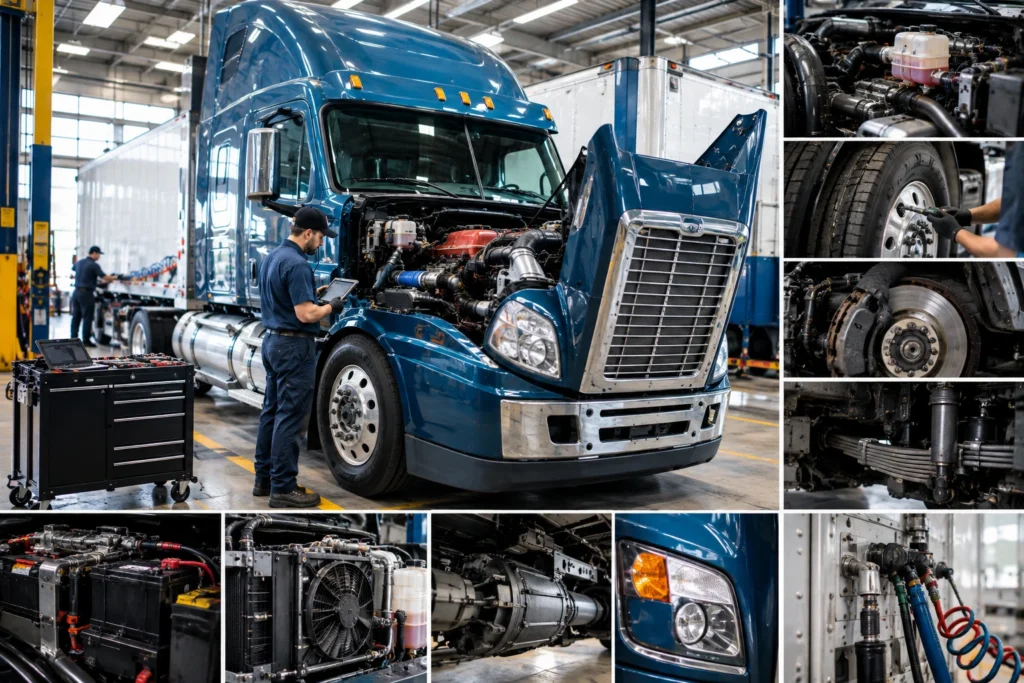
Checklists that cover all major systems on a truck are the foundation of any good service program. Use this checklist as a reference and combine it with the inspection schedule below to determine how often you should check each item.
Checking the Engine Oil and System
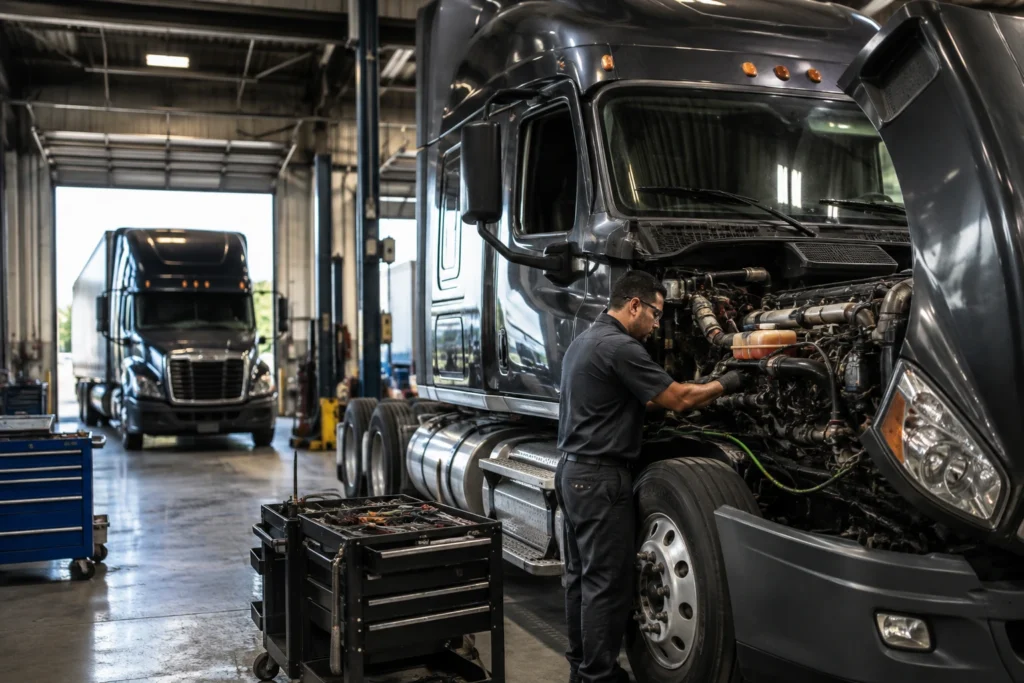
- Check the oil condition and level. Look for metal particles or contamination.
- Replace the oil filter at regular intervals.
- Check for clogging or restriction in the air filter that could reduce engine performance.
- It is important to inspect the fuel system and filter, especially for diesel engines.
- Check belts and hoses to see if they are cracked, frayed, glazed, or have leaks.
- Attention to engine noises and exhaust smoke color. Both are diagnostic clues.
Tires, wheels, and alignment
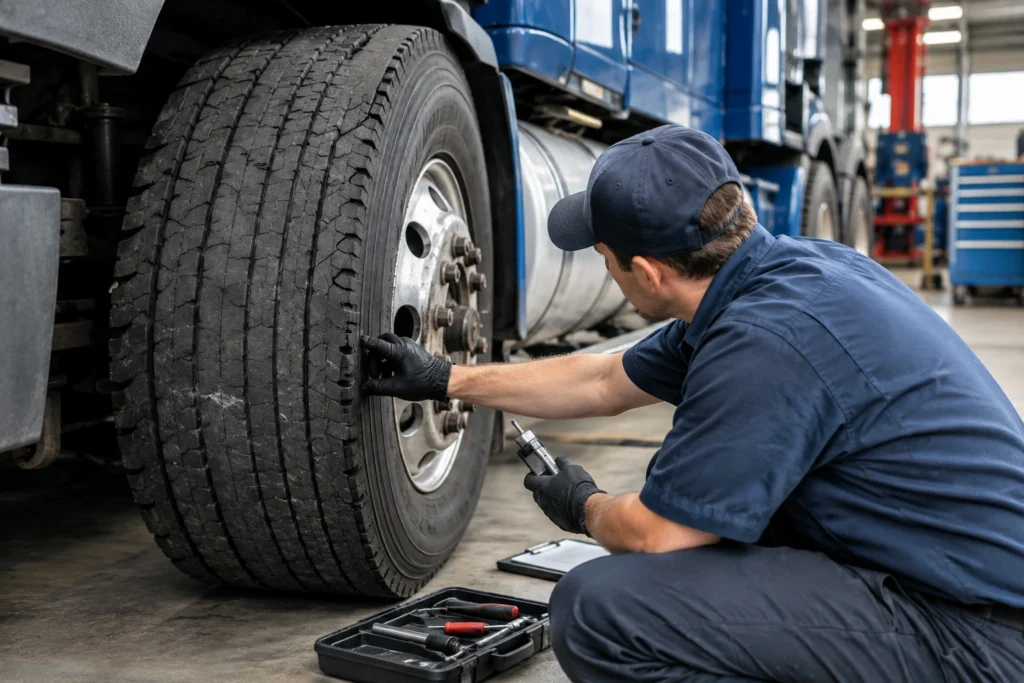
- Compare the tread depth to the legal minimums.
- Regularly check tire pressure, and adjust for seasonal temperature changes.
- Uneven wear patterns can indicate alignment or suspension issues.
- Verify the wheel lug torque.
- Check the sidewalls of your vehicle for any cracks, bulges or embedded debris.
Brakes and Braking Parts
- Compare the thickness of brake pads or shoes with wear indicators.
- Check the air brake system on heavy-duty vehicles. This includes checking the air lines, compressor and chambers.
- Check the brake fluid levels and condition of hydraulic systems.
- Listen for squealing or dragging to one side when braking.
- If the ABS warning light is on, run diagnostics.
Suspension and Steering Systems
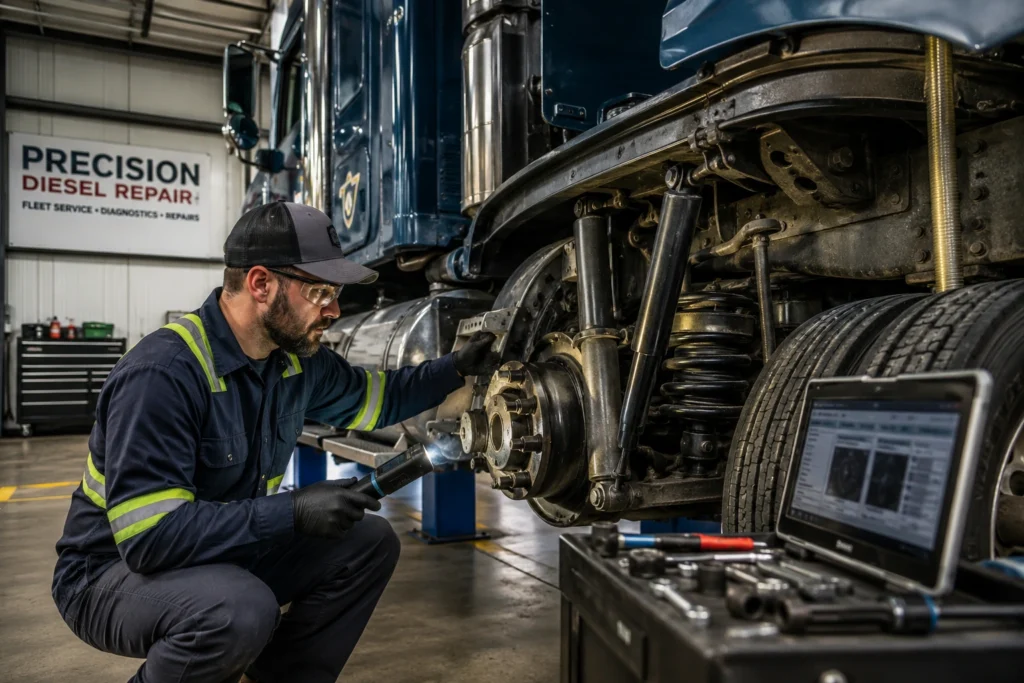
- Check shock absorbers, leaf springs and other components for damage or wear.
- Check for excessive play in the steering linkage or kingpins.
- Check the steering wheel to see if it is looser than normal tolerance.
- If equipped, inspect the air ride suspension bag for damage or leaks.
Batteries and Electrical Components
- Verify that the battery terminals are free of corrosion and secure.
- Test the battery voltage and charge.
- Verify that the alternator is charging correctly by checking its output.
- Check the wiring harness to see if there are any chafing marks, exposed wires, or heat damage.
Cooling system and fluids
- Check the coolant level and condition.
- Check the radiator and hoses to see if there are any cracks or leaks.
- Look for signs of excessive heat during normal operation.
- Check the transmission fluid, power-steering fluid and windshield washer fluid level.
Transmission and Drivetrain
- Check the color and level of transmission fluid.
- Test the smoothness of clutch engagement on manual transmissions.
- Check the drive shaft and U-joints to see if they are worn or loose.
- Check differential fluid levels.
- Listen for grinding or slipping during gear shifts.
Safety equipment, such as lights, signals, and safety equipment
- Test the brake lights, turn signals, brake lights and headlights.
- Reflective tape and marker lights should be checked for visibility.
- Test the backup alarm and horn.
- Check that the first aid kit, fire extinguisher and reflective triangles are all present and easily accessible. These items must be in place to comply with DOT regulations.
Trailers and connected equipment inspection
- Check the couplings and fifth-wheel connections.
- Check the trailer brake and lighting connections.
- Test landing gear operation.
- Check cargo securement points, such as straps, chains and load bars.
- Use the same standards to check the trailer wheels and tires as you would for the tractor.
Truck Maintenance Schedule: Daily and weekly maintenance, monthly and mileage-based
Knowing what to inspect is only half of the equation. Knowing how often to inspect it keeps a fleet in good working order. This is a practical framework that you can adapt to suit your operation and manufacturer guidelines.
Daily pre-trip and post-trip inspections
Before and after every trip, drivers should do a quick, but thorough, check of their vehicle’s lights, brakes and mirrors. It’s a requirement of the DOT, and is often the first step in preventing a minor issue from becoming a major breakdown.
Weekly Maintenance Checks
Weekly, check tire pressure, tread wear and fluid levels. Do a visual walk around to detect any leaks or damage.
Maintenance tasks for monthly and quarterly
Check suspension and steering components and brakes for wear.
Mileage-Based Maintenance Milestones
It is better to schedule some maintenance around mileage than by a calendar. The intervals for oil and filter changes and transmission fluid service should be adjusted to the duty cycle of your truck and operating conditions. The manufacturer’s guidelines are most reliable, as intervals can vary depending on the engine type and the way the truck is operated.
Common Signs That Your Truck Needs Service
It is important to be aware of the symptoms that indicate a developing problem, even if you have a good maintenance plan. Early detection of these symptoms can mean the difference between an easy fix and a costly repair.
- Dashboard warning light — warnings for low air pressure, ABS or check engine should never be ignored.
- Unusual Noises — Grinding, knocking or squealing air leaks are all signs of specific problems that should be investigated immediately.
- Fluid leaks under the vehicle – the color of the fluid will tell you if it’s oil, transmission fluid, or coolant.
- Vibrations or pulling when driving – this is often an indication of tire, suspension, or alignment problems.
- Fuel efficiency decreasing — A gradual decline can indicate an engine, tire pressure, or filter issue.
- Electrical glitches or difficulty starting — often related to the alternator, battery or wiring.
- Exhaust Smoke – Color (blue, white, or black) can indicate different problems, ranging from fuel system issues to oil burning.
What affects semi truck maintenance costs?
The truth is, fleet owners ask for a “normal budget” but it depends on several factors:
- Vehicle mileage and age — Older, higher-mileage vehicles require more frequent maintenance.
- Duty Cycle and Routes — Long-distance highway driving wears out components differently from regional or local routes that require frequent stops. Terrain or climate may also accelerate the wear of brakes, tires and cooling systems.
- Quality of parts — The cost of repair is affected by the quality and quantity of parts.
- Service Approach — Fleets that adhere to a pre-planned schedule tend to have fewer unplanned, large repair bills than those who wait until something breaks.
- In house versus outsourced services — fleet sizes and internal capabilities determine whether it is more cost-effective for you to do the work yourself or partner with an outside repair shop.
- Downtime is often the cost that’s overlooked. The cost of a truck that is idle can be more than the repair bill.
Staying ahead of repairs can lower long-term costs
It’s a simple logic: small, predictable costs, spread over time, are usually cheaper than a large, unexpected repair bill. In addition to the savings, a consistent service record can support warranty claims as well as help maintain resale values when it comes time to replace trucks in the fleet.
Professional Truck Repair Services: When to Use Them
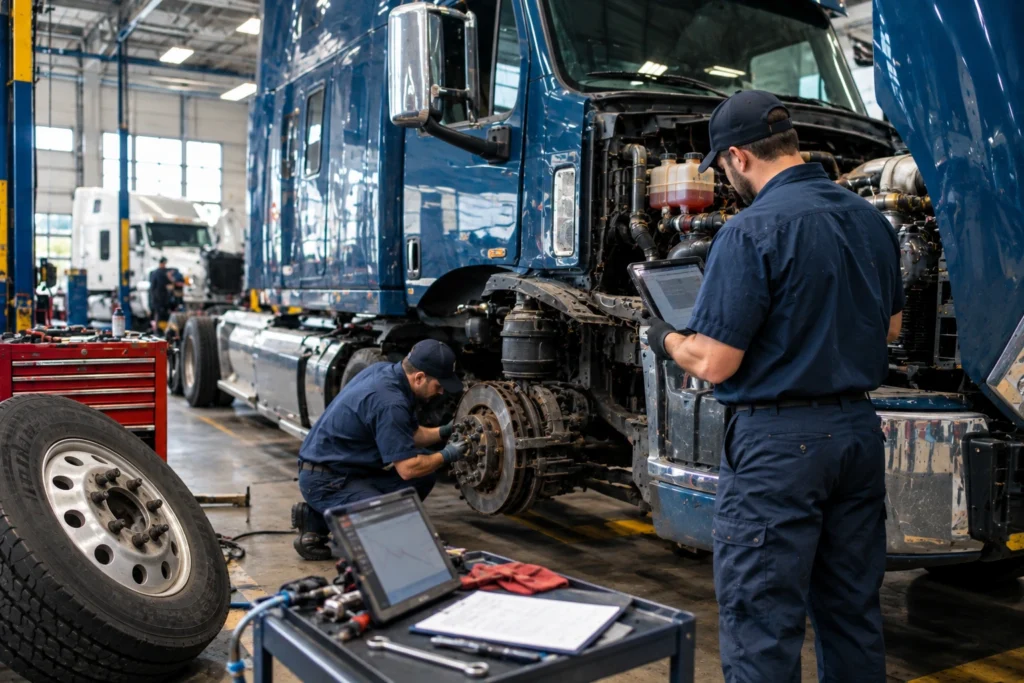
Fleet owners and drivers can perform some maintenance tasks themselves — for instance, fluid top-offs and visual inspections. They can also replace basic bulbs. Some jobs require certified expertise. For example, brake system work and engine diagnostics. Transmission repair, electrical troubleshooting and DOT inspections are all tasks that benefit from the experience of a technician.
A trusted partner can make a big difference. Our technicians at Diesel Works, BTX use the latest diagnostic equipment to identify problems early, properly document the service, and quickly get trucks on the road. Look for a partner with certified technicians, clear warranties, and experience working on fleet vehicles, not just auto repairs.
How to reduce downtime and extend the life of your truck
Few consistent habits will make a significant difference to the life of your truck and how frequently it is in the workshop:
- Keep detailed logs of all vehicle maintenance for your fleet.
- Take pre-trip and after-trip inspections very seriously. They are your first line.
- Track service intervals using a fleet management software.
- Stock up on common wear items to reduce repair turnaround times.
- Establish a long-term relationship with a shop such as Diesel Works BTX to handle both routine maintenance and emergency repairs.
- Do not put off small problems until “next time.”
- To get the best life from your tires, rotate them and check their alignment on a regular basis.
Conclusion
Commercial truck maintenance shouldn’t be a one-time job. It’s a continuous commitment to protect your drivers, equipment and bottom line. Fleet owners can prevent costly repairs by following a checklist and maintaining a regular schedule.
The team at Diesel Works BTX can help you create a plan to keep your trucks safe and reliable, mile after mile.
FAQs
How frequently should commercial trucks receive service?
Most vehicles require daily pre-trip checks, weekly fluid and tires checks, monthly in-depth inspections of brakes and suspension and mileage-based services for oil, filters and transmission fluid according to manufacturer recommendations.
What’s included in the standard commercial truck maintenance check list?
The checklist includes items such as: engine and oil systems, tires, alignment, brakes and suspension, steering and suspension, electrical components and battery, cooling system fluids and system, transmission, safety and lights equipment, and trailer connection.
What is the average cost of semi truck maintenance?
The costs vary greatly depending on factors such as the age, mileage, duty cycles, parts quality and whether the repairs are done in advance or after something has failed.
What can happen if you neglect fleet maintenance?
By skipping routine services, small and inexpensive problems often turn into costly repairs. It also increases the likelihood of roadside breakdowns.
What is the difference between proactive and reactive truck maintenance
The former involves inspecting and servicing parts on a regular schedule in order to detect issues early. The latter means fixing something after it has failed, usually at a more expensive cost and less convenient time.
How do fleet owners reduce maintenance costs for trucks?
By sticking to a regular schedule of service, training drivers in proper pre-trip checks, keeping detailed records and working with a repair shop that has experience, costs can be kept down over time.
What tasks should fleet owners leave to technicians certified in brake system repair, engine diagnosis, transmission work and DOT inspections?
These are the jobs that require a qualified technician. Working with a reliable provider such as Diesel Works BTX will ensure that the work is completed correctly and properly documented.