Tires are an important safety element in any semi truck, and often do not receive any attention until it is too late. It is important to understand when semi truck tires need to be changed and when they can be repaired, as this will save owner-operators and fleet managers both money and time. The following guide presents the signs that indicate tire problems and explains the damage to look out for, as well as the correct actions to take during an emergency.
Common Signs Your Semi Truck Tires Need Replacement
Most of the time, vehicles give warning signals about tire problems before the tire blows out. This early identification of tire issues enables truck drivers to replace the tire proactively rather than suffering the inconvenience of getting stuck somewhere when the tire fails.
Here are some common indications of tire problems:
– Worn out tread depth nearing the law limit
– Visible cracking or dry rot on the tire tread or sidewall
– Bulges, blisters or soft patches on the tire surface
– A visible sign of exposed steel belts or cords
– High air pressure loss even after topping it off
– Presence of vibrations or pulling while driving.
If any of the above signs are observed, it is important to get the tire checked. In case of getting more than one sign, the tire should be replaced.
Depth of Tread and Patterns of Wear
The depth of tread causes influence on performance of a tire together with the distance of braking and traction. The drivers should control the depth of tread with the help of a gauge and check the measurements according to the legal minimum for large vehicles. (Note to writer: check the current standards of FMCSA and DOT before publishing as they may update the rules). The less tread individuals have, the longer they need to stop and the higher the chance to hydroplane.
Uneven Tread Wear as the Warning
The uneven wear of tread is one of the best signs that something more than usual is wrong with the tire. Wear, like feathering, cupping, and wear of one side of the tread suggests that the alignment might be wrong or there is under or over inflation of the tire or suspension issues may exist. If the uneven tire wear of the tire is fixed in time, the tires can work longer.
Tire Damage That Requires Immediate Attention
Tire damage should not be perceived as uniformly harmful. While certain types of harm can be corrected with repairs, others imperil the tire’s integrity and make it dangerous to use. Knowing the difference between the two provides the driver with an opportunity to avoid hazardous situations on the road.
The following types of tire damage require immediate action:
Cuts, punctures, or bulges of the sidewall
Rapid leak or visible blowout
Physical damage caused by overheating due to under-inflation
Impact damage caused by potholes or road debris
Ignoring the above hazards can cause the tire to fail while the truck is loaded and traveling at highway speed.
At the same time, there are types of damage that cannot be repaired. Repeatedly going over limits on repairs could leave a weak spot that can break at any moment out of the blue.
Semi Truck Tire Replacement vs. Tire Repair: How to Decide
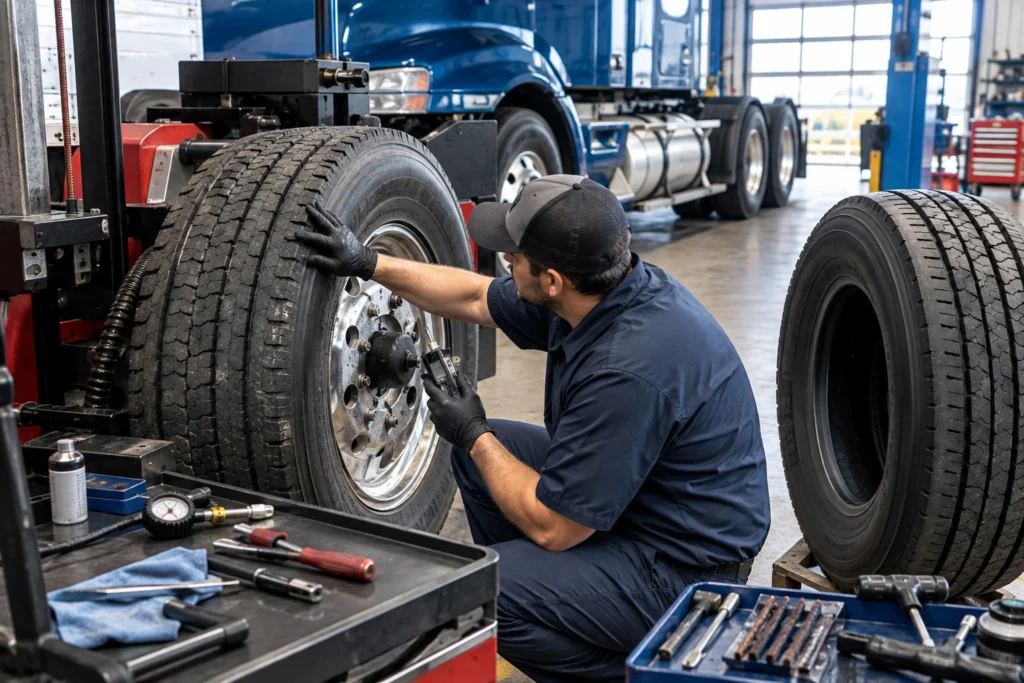
One of the most common questions truck owners ask is whether a tire needs to be replaced or whether it can be repaired. The answer depends on the type, size, and location of the damage, along with the tire’s overall condition.
In general, repair may be appropriate for minor punctures in the tread area, as long as the damage is within accepted size and location limits and the tire has adequate remaining tread. Replacement becomes the safer option when damage affects the sidewall, when a tire has already been repaired multiple times, or when the tire shows structural issues like separation or dry rot — even if tread depth still looks acceptable.
When a Tire Can Still Be Repaired
Minor tread punctures caused by nails or small road debris can often be repaired by a qualified technician using proper plug-and-patch methods. This is different from a quick roadside plug, which is typically a temporary fix rather than a permanent repair. A professional inspection should confirm the damage is within safe repair limits before the truck returns to full service. DIY repairs on commercial tires are not recommended, since improper repairs can fail under load.
When Replacement Is the Safer Choice
If a tire has needed repeated repairs, shows signs of internal damage, or is simply old enough that the rubber has started to degrade, replacement is usually the safer and more cost-effective long-term choice. Tire age matters even when tread looks fine, since rubber compounds break down over time regardless of mileage.
Factors That Affect Semi Truck Tire Replacement Cost
Semi truck tire replacement cost varies based on several factors, and understanding them helps owner-operators and fleet managers budget more accurately.
Key cost factors include:
- Tire position (steer, drive, or trailer)
- Tire brand and quality tier
- New tires versus retreaded tires
- Number of tires being replaced at once
- Labor charges, including mobile or roadside service fees
- Regional pricing differences
Fleet managers replacing tires across multiple trucks may also factor in scheduling and downtime costs, not just the price of the tires themselves.
New Tires vs. Retreads
Retreaded tires can be a cost-effective option for certain positions, particularly trailer axles, where the demands on the tire are different than on steer or drive axles. New tires are generally preferred for steer positions, where handling and steering precision are critical. (Note to writer: avoid citing specific price figures unless sourced from a verified, current pricing reference, since commercial truck tire replacement cost fluctuates by market and supplier.)
Truck Tire Safety and Preventive Maintenance
Truck tire safety depends heavily on consistent maintenance rather than reactive fixes. Routine inspections, correct inflation pressure, and proper rotation schedules all extend tire life and reduce the chance of an unexpected failure.
Preventive habits that support long-term tire health include:
- Checking tire pressure regularly, including cold-weather adjustments
- Rotating tires according to a consistent schedule
- Monitoring load ratings to avoid overloading
- Watching for early signs of uneven wear
Building a Routine Tire Inspection Habit
A simple pre-trip inspection habit can catch small issues before they become bigger problems. Drivers should visually check tread, sidewalls, and inflation before every trip, and fleet managers should keep records of wear patterns over time to spot recurring issues across a vehicle or route. Scheduling regular professional inspections, such as through Tire Repair Services in Brownsville, helps catch developing problems early and keeps minor repairs from turning into full replacements.
What to Do During a Roadside Tire Emergency
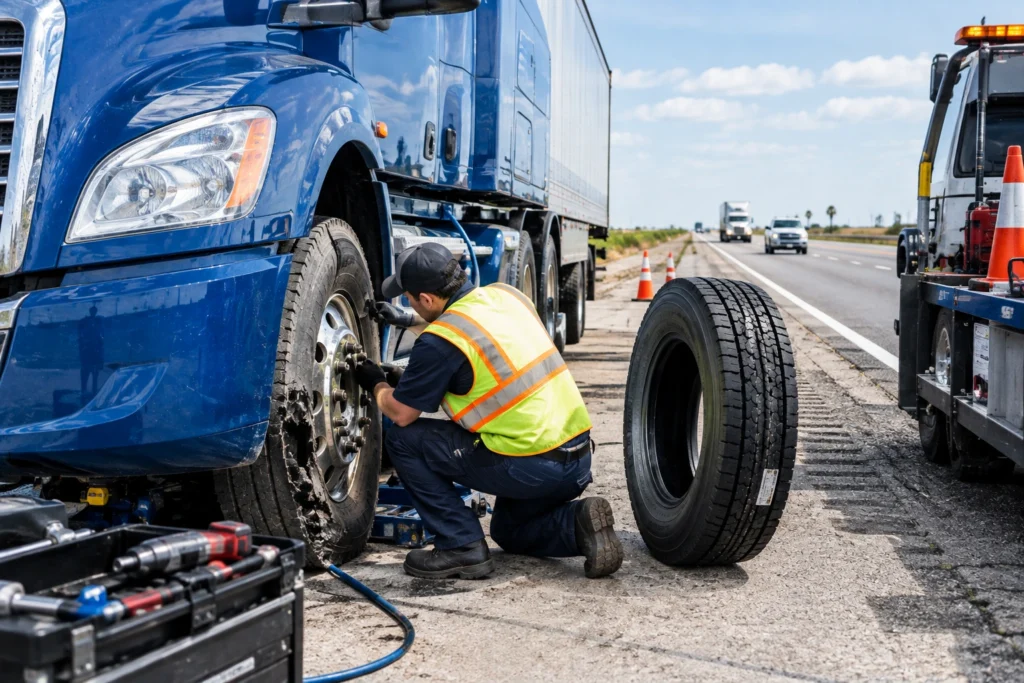
A tire emergency on the highway requires quick, careful decisions. Pull over to a safe location as far from traffic as possible, engage hazard lights, and set out reflective triangles or flares according to standard safety procedure. Before attempting to move the truck again, assess whether the tire is safe to drive on or whether it needs to be replaced on the spot.
When to Call for Emergency Truck Tire Replacement
If the tire is flat, severely damaged, or shows signs of sidewall failure, it’s not safe to continue driving — even a short distance. This is when calling for emergency truck tire replacement makes sense. Waiting or attempting to drive on a compromised tire increases the risk of further damage to the wheel, rim, or nearby components, and puts the driver and other traffic at risk. A mobile tire service can often get a truck back on the road faster and more safely than attempting a workaround.
How Professional Tire Service Reduces Downtime for Fleets and Owner-Operators
Downtime is one of the main expenditures of fleet managers and owner-operators when it comes to tire problems. Consulting a tire expert helps reduce downtime by obtaining early recognition of problems, accurate identification of issues, and carrying out effective repairs and replacements.
Scheduled fleet tire service programs make it possible to check and service a number of trucks according to a set plan instead of waiting until the failure occurs and unplanned stop is necessary. Professional diagnostics are also useful in uncovering associated problems – for example, a truck that has been serviced can be examined for any other possible problems. Fleet managers tend to combine tire service with broader mechanical inspections like Diesel Engine Repair Service in Brownsville that allows for efficient maintenance of the vehicle system.
Conclusion
Choosing between replacing or repairing a tire on a truck is determined by the extent of damage, condition of the tire, and the potential danger involved. The execution of regular tire inspection, paying attention to the wear pattern of tires, and fixing damage quickly help both drivers and fleet managers to prevent unforeseen breakdowns. If in doubt, it is advisable to have a professional evaluation carried out — Diesel Works BTX is always ready to help with both precautionary inspections and urgent repairs.
Frequently Asked Questions
How often should semi truck tires be replaced?
There isn’t one specific number for mileage that suits all tires, since the timing for replacement depends on the condition of the tread, any damage, the age of the tire, and the use of the truck itself. The best way to know the timing of when to replace each tire is to inspect them regularly.
Can a semi truck tire with a sidewall puncture be repaired instead of replaced?
In general, the answer is no. Damage to the sidewall seriously compromises the tire’s structural integrity and cannot be repaired safely, as opposed to damages that occur in some punctures made in the tread area.
What is the average lifespan of a semi truck tire in miles?
The lifespan of tires may vary greatly, depending on the type of tire, the weight applied to it, the condition of the road, the state of maintenance of the tire, and the manner of driving. Consequently, there is no single mileage figure that would apply to many cases.
Is it safe to drive on a semi truck tire with a slow leak?
It is better to have a slow leak examined rather than leave it unattended. Continuing driving on a tire that is not fully inflated will lead to overheating and damaging the tire internally, even if it seems not to be completely flat.
How much does it cost to replace a full set of semi truck tires?
Cost is determined by such factors as the brand of the tire, the place it takes, etc. Pricing differs between markets and suppliers, therefore, a current quote should be obtained instead of relying on a rough estimate.